Showing posts with label fungi. Show all posts

Wednesday, September 8, 2010

The Mounds of Brazil

As I mentioned a couple of posts back, I recently spent a week in Brazil.
I always imagined that when I finally made it to the Southern hemisphere, it would be this amazingly wonderful naturalistic experience. I’d get off the plane and gaze at the stunning peaks from the Lord of the Rings movies. In the near-distance a herd* of kangaroos would bound towards old-growth eucalyptus forest. A bit further away, penguins would be leaping off jagged cliffs into the ocean and just off the tarmac ancient clumps of Welwitschia would be growing in the sandy soil. Maybe I’d have landed just after dusk, and the Southern Cross would be rising in the evening sky.
*Pack? Flock? Gang? What is a group of kangaroos called, anyway?
It wasn’t anything like that.
Brazil Welcome This was a work-trip, and the company doesn’t pay me to go out and commune with nature. They pay me to sell stuff to big companies in high-rise buildings in cities. Sao Paulo is either the first or second largest city in the Western Hemisphere, and flying in the sheer scale of the place is awe-inspiring- an endless sea of towers riding out of the smog.
Tangent: Only SciFi buffs will get this one. Years and years ago, I read Asimov’s Foundation Trilogy. The capital of the Galactic Empire was the planet Trantor, whose entire surface was covered by one, continuous, planet-wide city. We landed in Sao Paulo just as the sun was rising, and as I looked out of the window, my first thought was “Trantor.”
SP from plane I spent most of the week in Sao Paulo, where most of the companies we sell to (banking, financial services) are headquartered. The city is remarkable not only for its scale, but for its contrasts. Rio Favela In urban Brazil First and Third Worlds exist side-by-side, and as you go about the city on your business, you cross between the two repeatedly. In First World Brazil, you meet in offices where you’re served coffee in china cups and saucers, and dine in elegant restaurants atop skyscrapers, or ensconced in opulent multi-level shopping malls, watch over by private security staff. In the Third World Brazil you step quickly around piles of trash, watch your pockets and stay off the streets after dark.
Extra Detail: In my office here in Salt Lake City, out of 45 coworkers, I know of only one who’s been mugged*. In my company’s Sao Paolo office, which has about 35 staff, a colleague with whom I spoke could not think of a single coworker who had not been mugged. I could do an entire post full of nothing Brazilian robbery-tales heard over the week, with everything from roadblocks to teams of gun-toting motorcycle bandits who prey upon motorists stuck in traffic.
*It was Matt, who was mugged while on an LDS mission in, yes that’s right, Brazil.
Speaking of motorcycles, a few posts back I mentioned the wide variance in levels of risk tolerance accepted by me and my physician. I experienced a similar disconnect in risk-acceptance in Sao Paulo, but this time with me on the caution end of the spectrum.

Wherever you go in SP or Rio, motorcyclists are weaving in and out of traffic. My favorite moment- which I failed to get on film- was when a motorcyclist as lane-splitting alongside our taxi at ~70 KPH, maybe 12 – 15” from my door, and as he did so was dialing a cell phone with his left hand!

Speaking of taxis, they’re remarkably clean, efficient and courteous in Brazil, as well as very reasonably-priced. They put American taxis to shame. Another area where Brazil puts us to shame is air travel. I took 3 domestic flights in the country. All of them- and the accompanying airport-check-in/security experiences- were delightful- well-organized, on-time and courteous.
Tangent: I should mention that I very much liked the Brazilians I met, worked and interacted with during the week, and that specifically, they were a pleasure to sell to. By “pleasure to sell to…” BTW I don’t mean that they were particularly easy to sell to, but simply that I enjoyed doing business with them. When you’ve sold in a dozen or so countries to at least as many nationalities, certain countries/peoples stand out as more or less pleasurable to do business with. One of my favorite peoples to do business with for example is the Dutch. They’re courteous, straightforward, open-minded and pragmatic. One of my least favorite peoples to do business with is the English*- despite the common language and history I find their indirection and evasiveness exasperating. The same qualities that make both their humor and their literature so wonderful- full of subtlety and irony- make them a royal pain in the ass to hammer out a deal with.
*Before you get on my case for being all anti-Brititic** or what-not, my paternal grandparents were British subjects who met and wed in the UK before emigrating to the US. My father was a dual US/UK citizen until his 40’s. My ancestors include Howe’s second-in-command at Saratoga and a passel of other Englishmen who spent their lives working, fighting and/or dying across the British Empire. My maternal grandfather fought for the British army in WWI. I’ve been to England several times and have generally liked the Brits I’ve known. I just don’t like selling to them.
**I am making up one new word per post.

Nested Tangent: Like many Americans, I’m tempted to award 1st place to the Canadians, but am ruling them ineligible due to my own bias. As an American I inevitably perceive Canadians as being more or less like Americans, except way, way nicer*.
*Note to Canadian Readers: I’m sorry. I know that annoys the crap out of you when we describe you as “nice Americans”, but it's the truth. That’s really how you seem to us.
And it seemed that the Brazilians enjoyed doing business with me. 200px-Rafinhabastoswiki Wherever I went I was warmly received, and people seemed almost oddly charmed with me. On my fourth day in Brazil I found out why. Ever since growing my beard, I’ve taken it for granted that my doppelganger is Mahmoud Ahmedinejad. But in Brazil it appears I have an even closer double: Rafinha Bastos (pic right), one of the country’s most popular stand-up comics, and co-host of the TV show Custa o Que Custar (“Whatever it Takes”), a weekly comic/ironic news roundup of current events.

Co-workers Matt and Sid claim I even sound a bit like him.
Cristo caption After 4 days in SP we flew up to Rio for the day, and then on to Brasilia, the capital, for a day and a night. Brasilia lies several hundred kilometers North and inland from Rio and SP and is situated in what’s called the cerrado- a type of neotropical savanna, most of which is now farm or rangeland*. National Museum captionBrasilia is a planned city which didn’t exist until the late 1950s. The architecture of the city is striking- a 1950’s vision of what the future would (or ought to) look like. Brasilia feels sort of like someone plopped down the set from a Jetsons episode in the middle of a savannah.
Side Note: Historically, the cerrado has been a pretty crappy place for agriculture, with chronically acidic and nutrient-poor soils. But in recent years Brazil has made huge progress in making the cerrado agriculturally productive, both through new farming techniques and modification/adaptation of alien crops, such as African grasses and Asian soya, to the cerrado climate. A detailed briefing can be found in the August 28 issue of The Economist.
After the crowding, bustle and craziness of SP and Rio, Brasilia seemed wide-open, organized and clean, with wide roads, minimal traffic and clear skies. It was dry- not unlike Utah- and I felt oddly at home there. We spent the day driving between the offices of various government-owned banks, pitching our wares. Legislature caption After lunch we squeezed in a quick tour of the sights for the Americano, including drive-bys of the Palacio do Planalto (President’s office), National Congress, Supreme Court, and various museums and monuments. The tour ran a bit late, and my colleagues urged the taxi driver to hurry to our next appointment. As we did so, we were driving alongside a recently-burned field when I noticed unusual earthen mounds protruding from the ground, mounds that I’d seen countless times in photos, but never before in real life. I’d spent nearly a week in malls, offices, taxis and airplanes, and now, finally, I was seeing something really cool…
IMG_7091 “Stop! Tell him to pull over!” I cried. We slowed to a stop and I bounded out of the cab, sprinting across the charred cerrado in my dress shoes, jacket and tie flying. Moments later one of my colleagues, Ricardo, joined me, and together we examined the remarkable termite mounds of the Brazilian cerrado.
All About Termites

What everybody knows about termites is that they’re little white bugs that eat wood, and they live in colonies, like ants. So they’re basically little white ants that eat houses, except that’s not really what they are at all.
All termites eat cellulose, but only a minority of species regularly attack houses. Termite1 Termites (pic right of worker, not mine) have been around at least since the Cretaceous, and likely since the Jurassic- long before houses were available to eat. They digest cellulose with the help of micro-organisms in their gut, and what’s interesting is that these micro-organisms take on different forms. In about 40% of termite species, the gut-assistants are protozoans, single-celled eukaryotes, meaning that, like us, they have “standard” cell structure with a well-defined nucleus. But the in other 60%, the gut-assistants are prokaryotic (bacteria). These gut assistants can comprise up to 1/3 of the weight of a given termite, and are “transmitted” from individual to individual by trophallaxis, which in the case of termites generally occurs (ew, ick) anus-to-mouth. Termites are eusocial insects, meaning that they are divided into distinct breeding and sterile worker (and sometimes soldier) castes, like ants and (many) bees, and like those insects live and work together in large colonies.
But termites (pic left of soldier, not mine) are different from ants and bees in a number of Termite Soldierways, not least of which is their gender-demographics. In ants, bees and wasps, all workers are female. Males only exist as drones, who basically mate (or try to mate) and then promptly die. Termite workers are both male and female, generally (but not always) sterile. And termite colonies have not just a queen, but a king!
Termite reproductives, or alates- male and female- leave the nest upon maturity Cathedral captionto seek out mates, just like the drones and virgin queens of ants, bees and wasps. But unlike those insects, after the termite couple hooks up, the male doesn’t drop dead. Instead the couple goes off together to attempt to found a colony. The king not only continues to live, but also to mate with the queen throughout their long* lives. It’s sort of the Ozzie and Harriet version of the ant/bee/wasp story.
*Up to 17 years in captivity.
On the cerrado termites initially nest underground, but as their colonies grow and expand, they grow not only down, but up. IMG_7092 Termite mounds, though new to me, occur over large stretches of South America, Africa and Australia. Though they’ve been known to reach heights of 9 meters, 1 to 3m is more typical. Calling it a “mound” grossly understates the complexity and function of the structure. Termite mounds leverage updrafts to cool the interior of the mound. And even more remarkably, over the course of the day termite workers will selectively open and close specific tunnels to control airflow and regulate internal temperature. This is important not just to manage the temperature of the nurseries, but also- in many cases- of the fungal gardens. Many termite species raise fungi of the genus Termitomyces, which obtain nutrients from the excrement of the termites. The mounds of such fungal-farming species contains carefully temperature-controlled farm/latrine chambers where the fungus grows.
Extra Detail: In Northern Australia the species Amitermes meridionalis builds mounds that are tall, wide and very thin, almost like tombstones. These mounds are always oriented on a North-South axis, and it’s believed that the termites are able to sense the Earth’s magnetic field. The North-South alignment maximizes the exposure of the mounds to the sun at dawn and dusk, but minimizes it at mid-day.
IMG_7100 Gazing across virtually any un-developed field around Brasilia you’ll spot dozens and dozens of these mounds, hinting at the millions and millions of termites within and below. In large areas of the tropics termites occupy a similar niche as do earthworms in temperate regions as primary tillers of the soil. And due to the amount of vegetable matter they consume, they’re regarded as pests, not only for crop damage but because they so quickly remove nutrients from the already nutrient-poor tropical soils.
Side Note: One other, much less scientific, but surprising, personal observation for me was just how hard the mounds are. IMG_7094 Viewed from a distance they look sort of sandy and crumbly, almost like they ought to wash away in the rain, but to the touch they feel like rough concrete pillars- you’d need a hammer and chisel to take one apart*. According to Ricardo, some years ago the Brazilian government funded a study to determine and possibly replicate the chemical structure of the mounds, with an eye to using the substance as a base for roadbeds.
*Also according to Ricardo, one thing that does routinely take them apart is the Southern Tamandua, Tamandua teradactyla, one of four species of anteaters native to the Americas. Its claws are well-adapted to tearing into termite mounds.
termite mound schematic Termites can create such structures (diagram right, not mine) because, like other eusocial insects, they cooperatively work together in large numbers. Eusociality is fascinating not just in its scale, but in its origins. How did it come about? Why would some insects not reproduce so that their mother and (a few of) their siblings might?
This same question actually bugged Darwin, who cited the evolution of eusociality as a special difficulty in his theory of natural selection. Several decades later, a neat explanation was proposed based on the reproductive genetics of ants, bees and wasps, which, together with sawflies, comprise the order Hymenoptera.
Hymenopterans use a haplodiploid system of gender-determination, Palacio do Planalto caption which means that while females have 2 sets of chromosomes, males have just one. Imagine if instead of X and Y chromosomes, human females had 46 chromosomes (like they do now) but males had just 23. This arrangement leads to some interesting implications for how “family members” are related to one another. Since a male bee or ant has only 1 set of chromosomes, then every one of his sperm cells contains every one of his genes- because that’s all he’s got. A female bee or ant has 2 sets, and so each of her ova contains ½ of her genes.
So a queen bee goes on her (one and only) mating flight and mates with a drone. She receives a bunch of sperm, which she then stores internally for the rest of her life, using it to fertilize (potentially) many thousands of eggs. Her daughters- workers and new queens alike- will receive ½ of her genes and all of their father’s genes, which means that on average they will share- between sisters- ¾ of their genes*.
*But they’ll share only ¼ of their genes with their brothers. This is because haplodiploid males have no fathers; they’re the result of unfertilized eggs. The brothers share ½ their genes with each other, and- oddly- with their sisters, which makes sense when you think about it.
Haplo Bees This means that hymenopteran females are more closely-related to their own sisters than they would be to their own offspring- if they could have them- which leads to the so-called haplodiploid hypothesis of eusociality: If you’re a hymenopteran female, the best way to propagate more copies of your own genes is to help your mom make more sisters. It’s a great little story, a triumph of the modern synthesis of Darwinian natural selection and Mendelian genetics*, first(?) proposed by W.D. Hamilton back in the 1960’s, and told countless times since, in textbooks, popular science books, YouTube videos and blogs**.
*Which is why Darwin couldn’t have figured it out, not being exposed to Mendel’s work.
**Including this one, 2 years ago, when I talked about bees.
But the haplodiploid hypothesis doesn’t always hold up quite so tidily in the real world. Mound FootFor starters, many hymenopteran queens, including honeybees, mate with multiple- sometimes dozens- of different males on their mating flight, making their daughters only ¾ or ¼ - related to one another. On the other hand, this might not be an issue if eusociality had evolved prior to polyandrous mating.* But thousands of species of hymenopterans are not eusocial, and, perhaps more troubling, eusociality has evolved in non-hymenopterans, and non-haplodiploid animals, such as… termites.
*And in fact this paper in 2008 claimed to show that all hymenopteran eusocial lines originated from monogamous-mating ancestors.
Termites are diplodiploid, like us; both males and females have 2 sets of chromosomes. And eusociality has arisen in beetles, shrimp and even mammals (naked mole rat, Heterocephalus glaber), all of which are diplodiploid.
Diplo Termites In recent years, the consensus on the origins of eusociality has focused more on the broader issue of kin selection (also pioneered by Hamilton), defined as “the evolution of characteristics which favour the survival of close relatives of the affected individual”*. From the perspective of kin selection, the question is whether and when, from a genetic perspective, eusociality is a good deal.
*John Maynard Smith’s definition.
Extra Detail: I’m way understating the current and ongoing controversy around the origins of eusociality. Just 2 weeks ago, 3 Harvard biologists- including E.O. Wilson- published a paper in Nature arguing that natural selection explains eusociality just fine without resort to kin selection. The paper has generated strong criticism from, among others, Richard Dawkins and Jerry Coyne.
Consider an individual’s relatedness to the next generation*. A termite worker is 50%-related to its reproductive brothers and sisters, and only 25%-related to their offspring. For eusociality to be a good deal from the perspective of the worker, its reproductive siblings have to produce way more nieces/nephews than it (the worker) would be likely to produce offspring “going it alone”. (At least 2:1, though that’s an oversimplification, as we’ll see in a moment.)
*By “next”, I don’t just mean successive rounds of siblings, because at some point its queen/mom is going to die. You have to consider its “downlines”**, which since it has no offspring, are its nieces/nephews.
**Sorry. Living in Utah, it is inevitable that a titch of MLM-ese would make its way into the blog.
A hymenopteran worker is 75%-related to its reproductive sisters, and Supreme Court captionso 37.5%-related to their offspring. Given that it would be 50%-related to its own (hypothetical) offspring, the “good deal” niece vs. daughter ratio for a worker bee would be considerably less than 2:1, or more like 1.33 (50/37.5). So while haplodiploidy may not be a requirement for eusociality, would it make it either likelier to occur or easier to sustain? (The ratio is unrealistic because it ignores that in a non-eusocial context, her sisters- potentially all of them- would still be producing nieces/nephews as well, just not as many of them.)
I don’t know, and it is, as I’ve mentioned, a way controversial topic in evolutionary biology, but a possible hint may lie in the occurrence of eusociality. At present it’s thought to have evolved independently at least 17 or 18 times*. (New instances have been discovered just in the last couple of decades, and I imagine it’s likely more will be…)
*By “times”, I don’t mean species. There are probably a million(?) species of animals in the world with eyes, but eyes are believed to have evolved independently maybe several dozen times (~40-70). Similarly there are thousands of eusocial animal species, but the evidence is that eusociality itself has evolved only around ~17 or 18 times.
Of those 17 or 18, 11 were within Hymenoptera. Egg casesAnother 1 was with Thrips*, who although not closely-related to Hymenoptera, are also haplodiploid. Another instance was with aphids, who are cyclically parthenogenic, leading to inter-relatedness issue at least as weird and compelling as those in haplodiploidy. So 13 out of 17 (or 18) instances of eusociality appear to be linked with haplodiploidy or parthenogenesis. Kin selection may not depend on haplodiploidy, but it doesn’t seem to hurt.
*Order Thysanoptera. Teeny-weeny insects about 1mm long that root around in the soil and eat (mostly) stuff like fungal spores. 2 cool things about them. First, they’ve been around since the Permian; they’re one of the kinds of creatures that survived the cataclysmic Permian extinction, which made the K/T extinction event (dinosaurs) look like a rainy day at the park. Second, they have just one mandible, always on the left.
Of the remaining instances, 1 or 2 occurred in mammals (Naked Mole Rat, and possibly the Damaraland Mole Rat, Fukomys damarensis). 1 occurred in crustaceans (sponge-dwelling pistol shrimp, Synalpheus regalis), 1 occurred in beetles (Austroplatypus incompertus) and 1 in… cockroaches.
Roaches?!
Which leads us to the weirdest-thing-I didn’t know-about-termites: they’re cockroaches. Not just “closely-related to…” cockroaches, but cockroaches. Here’s a cockroach family tree. Cockroaches only form a monophyletic group if you include termites.
Roach Phylogeny Most Americans, if they’re familiar with any cockroaches, know the German Cockroach*, Blattella germanica, and the American Cockroach**, Periplaneta americana. An American Cockroach is more closely-related to a termite than it is to a German Cockroach. And both the German and American Cockroaches are more closely-related to termites than either is to the desert cockroaches.

*Which infested all of my college dorms. Sometimes late at night, I wonder which destroyed more brain cells during my college years- maryjane or the chemical residue from those roach-killer fog-bombs I used to detonate in my room periodically.
**Which infested the house outside of San Diego where I was born. Despite the name, it’s native to the Old World. In does well in the tropics and has been spread by shipping, which explains why it does so well in a warm-climate port like San Diego.
Side Note: See the Mantids branch of the family tree? Yup, that’s right- a Praying Mantis is pretty much a big green carnivorous roach.
The cockroaches most closely-related to termites are the Wood Cockroaches (genus = Cryptocercus). Wood Cockroaches live and care for young socially (but not eusocially) and digest cellulose with the aid of internal gut protozoans, which are closely-related to those inside of termites, and which the roaches transmit anus-to-mouth to their young. This required transmission has been suggested as a possible factor in roach/termite social evolution; without extended parent-offspring care/association, such transmission might not occur. Termites are wood roaches that became monogamous and took the next step to sterile worker and soldier castes. It’s a very different path to eusociality than that followed by the hymenopterans, who appear to have evolved from social predatory wasps.
I’ve talked a lot about mounds and termites without mentioning the species of the mounds I checked out. Ashtray caption It’s not easy to know; the termites only come outside/above ground at night, but more importantly, there are well over a dozen common mound-inhabiting species in the Brazilian cerrado. Researchers in the 90’s found that over a third of termite mounds in the cerrado contain more than one species of termite; some housed up to 14 different species! The relationships between these cohabitants are not entirely clear, but in at least some cases appear to be mutualistic. Different species of termites have different defensive mechanisms. Cortartermes sp., for example, a common mound-cohabiting species, has soldiers which specialize in chemical warfare. Perhaps multiple modes of defense compliment one another, benefiting the various cohabiting species.
Many mounds also contain 1 or more ant species. In some cases these are abandoned mounds, but in many others they’re mounds currently occupied by 1 or more species of termite as well. In some of these cases it appears that the ants may be playing a mutualistic defensive role in the mound, which is curious in that ants are generally the most reliable enemies of termites (the Tamandua notwithstanding.) In any case, there’s a lot happening inside those mounds.
From the taxi Marcio yelled at us to hurry; we were late for our appointment. Ricardo and I turned away from the termite mounds of the cerrado and jogged back toward the human mound of Brasilia.
Note about sources: An especially helpful paper was Evolution of Eusociality in Termites, Barbara Thorne. Additional information on eusocialty came from Eusociality: Origin and consequences, Edward O. Wilson and Bert Holldobler. Phylogenetic info on cockroaches/termites came from Death of an order: a comprehensive molecular phylogenetic study confirms that termites are eusocial cockroaches, Daegan Edward et al. Info on polyspecific mounds came from Ant and termite mound coinhabitants in the wetlands of Santo Antonio da Patrulha, Rio Grande do Sul, Brazil, E. Diehl et al. Info on ancestral monogamy of eusocial hymenopterans came from Ancestral Monogamy Shows Kin Selection Is Key to the Evolution of Eusociality, William O.H. Hughes et al. Additional info on- and specific examples of-eusociality came from this online course module developed by Zachary Huang of Michigan State University. The termite caste graphics used in the family tree were pulled from a pest control company website- I forget which one.

Thursday, April 8, 2010

Guest Week: Yeast is Way Cool Part 2

And now, for the exciting conclusion of Guest Week, SkiBikeJunkie wraps up his Awesome Yeast Series!

Wine consumption dates back almost to the origin of civilization, with the first known wine being produced in what is today Iran. Wine was initially made from wild grapes, but these grapes were soon cultivated and selected to produce a sweeter fruit, which would, incidentally, also yield higher alcohol content when turned into wine.

Grape cultivation originated around the Mediterranean and was a meaningful part of life in ancient Greece and Rome. Each culture had a god of wine, known as Dionysus to the Greeks, and Bacchus to the Romans. The historical wine making regions in Europe today got their start with the Romans, who first cultivated grapes there. After the fall of the Roman empire, the only real social structure in Western Europe was the Catholic church, which maintained the vineyards and wine industry, as it was a key element of the Mass.

Wine was also produced in ancient Egypt, but the preferred drink of the lower classes was beer. Beer has been produced since at least the 6th century B.C., and is again believed to have originated in the Middle East, in this case, what is today, Iraq. Virtually any beverage containing carbohydrates such as starch or sugar will naturally ferment, so it is likely various civilizations invented beer independently. If one considers that the production of beer and bread is believed by many to be responsible for humanity's ability to develop technology and civilization*, beer production is almost like an example of convergent evolution, though unlike photosynthesis, it's something that the species does without it having become part of the genetic code.

*What, you may be wondering, does beer have to do with developing technology and civilization? If folks were just drinking beer all day long, it would be hard to get any real work done, right? Not so fast. Bear in mind that safe drinking water is a relatively recent phenomenon. Beer and wine, with their moderate alcohol content, were safe from pathogens without being overly intoxicating. Wine was often diluted with water, thus providing a safe, mild drink. Beer, moreover, because of it's basis in grains, became not just a safe beverage, but a significant source of calories in many societies. Of course the beer they were drinking wasn't Budweiser, and often resembled a thick soup or gruel more than the clearish, yellow beverage** advertised so heavily during sporting events. So it was more like drinking your bread than it is today.

**Described that way, it's not so appealing.


Beer and wine making both appear to have begun with the use of wild yeasts. In the case of wine, the yeasts naturally occur on the skins of the fruit, so as the grapes are pressed, the yeast naturally becomes part of the juice, enabling the fermentation process. For beer, the process is similar to sourdough, where airborne yeasts were first used, but brewers quickly discovered that reusing the same barrels for fermentation that had been used in the last batch yielded better results. Thus they began cultivating their own yeasts, and using specific barrels (strains) for specific varieties of beer. Similar to breadmaking, the process was refined over the years to derive better, more consistent yeast cultures.

Both beer and wine can be brewed using wild yeasts and some still are today. Many European winemakers insist on using the wild yeasts even though they can cause inconsistent results and sometimes even spoilage in the resulting wine. Lambic beers, produced in Belgium in and around Brussels, are brewed using wild yeasts native to that area. Lambics are often blended with fruit juice or syrups to create a beer with a very distinctive, sweet, fruity flavor. More often than not, however, beer and wine are fermented with cultivated "sugar" yeast, most often S. cerevisiae*, the same stuff bakers are using to make their bread rise, and its cousin, S. uvarum*, the first yeast cell to be isolated back in the 1800's by Emil Hansen at the Carlsberg brewery in Denmark***.

*Almost certainly derived from Ceres, the Roman god of the harvest, which, incidentally, is the same root for the Spanish word "cerveza," meaning "beer."


**Formerly known as S. Carlsbergensis in honor of the brewery at which it was discovered.


***My ancestry is predominately Danish, which makes me feel like I should drink Carlsberg beer in honor of my heritage.


OK, so we've talked a bit about where beer and wine came from and how they came about, but enough of the history lesson already. This is supposed to be a science blog. Let's get to how yeast turns grape juice and cereal into alcohol and carbon dioxide. But since I majored in English and have been racking my brain all week* trying to figure this stuff out, we're going to do the butcher paper and crayons version.

*Seriously, after this one guest post, I have no idea how Watcher does this blog and finds time to ride his bike and finds time to read books to his kids and finds time to go to work and finds time to spend with his awesome wife** because this was seriously a hell of a lot of work***, a far cry from the lunch hour stream of consciousness missives that are the bread and butter of my (pathetic by comparison) blog that may occasionally entertain but never even begins to inform in a meaningful way.

**My family and I have spent time on a few occasions with Watcher, Awesome Wife, and the Trifecta. And as Awesome as Watcher describes AW as being in this blog, it is nowhere near as awesome as she is in real life. The Watcher family is a good bunch of folks.


***And I didn't even bother to put together a single awesome graphic. Seriously, how pathetic am I?


The simple explanation, in language that I understand and using metaphors with which I am well acquainted, is that the yeast eat the sugar in the grape juice/wort/dough/whatever else is being fermented. When they eat the sugar, it gives them a little flatulence, which is CO2, as well as makes them have to pee, which is ethanol. This is a way dumbed-down version, but puts it into terms that make sense to me.

The real, slightly more scientific description of the process is that two steps occur, glycolysis and fermentation. Glycolysis is the process by which one glucose molecule is broken down into two pyruvate molecules, in the process releasing ATP* and NADH, which the yeast cell can use for energy. Glycolysis is considered the archetype of a universal metabolic pathway--glucose as well as most monosaccharides can be converted to intermediates that follow this series of reactions.

*I learned about ATP synthesis in AP biology in 10th grade (I don't remember a thing about it). It's the only biology class I've ever taken, and I somehow got an advanced degree without ever having taken chemistry. Ever. I was able to satisfy the physical science requirement in high school by taking physics, which I should have failed but passed on a technicality. Were it not for that technicality, I would not have graduated high school. Which would have been embarrassing, since I conducted the graduation ceremony.

The pyruvate is then converted to acetylaldehyde and CO2. The NADH produced during glycolysis then reduces the acetylaldehyde to ethanol, leaving ethanol and CO2 as by-products. The ethanol remains in the beverage, which is what makes people feel relaxed when they drink it. The CO2 only dissolves in the beverage if there is an additional fermentation and the container is pressurized to ensure it doesn't escape. Regular wine does not have this second fermentation, but sparkling wine* does. If it is bubbly, the bubbles will make you happy.

*Sparkling wine, like so many culinary wonders, is the result of a happy accident, originally an error on the part of the winemaker. The wine was fermented in conditions that were too cold. It began fermenting in the fall, producing the ethanol. Then it got cold enough during the winter that fermentation ceased, but began again in the spring when temperatures rose, resulting in the second fermentation that led to the dissolved CO2. Until the invention of the wire cage to hold the corks in place, cellaring Champagne was a dangerous prospect, with corks arbitrarily popping, leading to a chain reaction that could destroy an entire cellar of product.


The bubbles in beer may come about as a result of an additional fermentation in the bottle (known as bottle conditioning) or in the cask (known as cask conditioning). They may also be added artificially by injecting CO2 into the finished beer, which is, incidentally, the most common method of making it bubbly*.

*Beer served on tap is typically served from a keg pressurized with CO2. The CO2 pressure forces the beer out of the keg and makes it bubbly at the same time. Nitrogen can also be used to pressurize the keg, so a beer served "on nitro" is using this technique. Since the beer is not cask conditioned in this case and nitrogen does not dissolve in beer, nitro beers will have a head of very fine bubbles but will not have bubbles in the beverage itself.

The same fermentation process occurs in bread dough, with the CO2 forming air pockets that become the holes in baked bread. Since the chemical process is the same, ethanol is also a by product, however, because the bread is then baked, the ethanol evaporates during baking.

Regular, commercial yeast (S. cerevisiae) does not like an acidic, or sour, environment. If bacterial activity creates too much acid, this yeast will die and make your bread taste funny. It will have an ammonia-like aftertaste and a weakened gluten structure. Wild yeasts, on the other hand, prefer an acidic environment, which is why they coexist well with the bacteria in sourdough. The bacteria create lactic and acetic acids, lending the dough its unique flavor, but this process requires about twice as long as the yeast needs to leaven the dough. A hearty yeast strain is needed to endure that long, another reason the wild varieties are preferred to the cultivated yeasts when making sourdough bread.

Punching down dough is a typical part of the bread making process and accomplishes four things: 1) it expels CO2, which would eventually otherwise choke off the yeast; 2) it allows the gluten in the dough to relax a bit; 3) it equalizes the temperature, which is typically higher inside the dough than outside; 4) it redistributes nutrients to the yeast, thereby kicking off a new feeding cycle.

Yeast are hungry critters, but then again so are we. And we wouldn't eat nearly as well as we do without them. So next time you nibble on a crust of bread, make sure and raise a glass to these little fungi that invisibly work to make eating and drinking so much better.

Wow- what a post! And a what a week! Thanks Phil, Kevin and SBJ for an awesome Guest Week!

Wednesday, April 7, 2010

Guest Week: Yeast is Way Cool Part 1

Today’s guest-poster is none other than the inimitable SkiBikeJunkie. I’m a regular reader of his blog, probably the best-written of Utah’s numerous bike-ski blogs, which covers of course his skiing and biking adventures, but also observations on everything from work to philosophy to school-mom attire. If you haven’t yet checked it out, you should.

I’ve mentioned before that I have a list of things I want to blog about before completing this project. For some time yeast has been on the list, and I’m grateful to SBJ for tackling it in full force with this awesome* 2-part series.

*It not only has tangents, but even a Half-Baked Theory!

The Post

When I told my wife I was doing a guest post about yeast, she informed me that the first thing she thinks of when she hears yeast is yeast infection. I can't imagine she's alone in this. Because she, being quite a skilled baker, should have a lot of interest in yeast aside from the kind that can get a little out of control down there. But even though she's cultivated her own wild yeast for sourdough starter, I guess the discomfort of a yeast infection was what she thought of first. Who can blame her?

Extra detail: Yeast infections are primarily from the Candida genus, hence the name Candidiasis for a yeast infection. They're in the same family as the yeasts used for brewing beer and baking bread but a separate genus (just in case you were starting to feel icky about beer or bread). Candida is a naturally-occurring commensal* in many mammalian species, and a yeast infection is evident not based on the presence of Candida but rather an overgrowth of the yeast. In other words, it's there all the time, it's just that sometimes there's too much of it, it penetrates the mucous membranes, thereby causing irritation. This same annoying yeast is also the cause of diaper rash.

*I didn't know what this word meant either. It's a class of relationship between two organisms wherein one benefits and the other is unaffected. Not to be confused with parasitism, wherein one benefits to the detriment of the other; competition, wherein both are harmed; or mutualism, wherein both benefit. Incidentally, symbiosis and mutualism are often confused. Mutualism is actually a type of symbiosis, as are commensalism and competition. How's that for disambiguation?

Extra, extra detail: Sourdough isn't just yeast, but rather a combination of wild yeast and bacteria. In the case of San Francisco sourdough, the most famous variety, the yeast is typically Candida milleri, and the bacteria is Lactobacillus sanfrancisco, both of which play a unique role. The yeast strengthens the gluten, while the bacteria ferments the maltose in the dough, generating acid in the process and giving the dough its distinctive flavor. Typically the ratio of yeast to bacteria in San Francisco sourdough is ~1:100.

Aside from causing irritation in the most inconvenient of places, yeast is way, way cool. And not just because it makes bread fluffy and beer bubbly, though we'll get to that part too. Culinary applications were, after all, the reason I was interested in this post, but since I learned some cool stuff along the way, we'll use that as background for the culinary uses.

Tangent: The first time I heard about yeast infections was when I was in high school. Not through first-hand experience, but when one of my friend's mom told us about the time her husband was on shore leave from the Navy after six months right when she happened to have a yeast infection. Being the good Navy wife that she was, she didn't tell him about it and just endured the discomfort. I hope she took advantage of a yeast by-product beforehand to distract her from the pain a bit.

Yeast is part of the Fungi kingdom. Baker's yeast, Saccharomyces cerevisiae, was the first eukaryotic organism to have its complete genome sequenced. Unlike many fungi, however, yeasts are single-celled organisms. When I first mentioned doing a post on yeast to Watcher, he mentioned that yeast are cool because they evolved from single-celled to multi-cellular and back to single-celled organisms. I couldn't find any research on the topic, so if you know anything about this, please speak up in the comments.

SPECIAL WATCHER NOTE: I told myself I wouldn’t enhance or edit any guest-posts, but this topic is just too cool to pass up. Yeasts almost certainly evolved from multicellular fungal ancestors, and, like just about everything really cool in nature- from flight to eyes, to tapeda lucida to C4 photosynthesis- have done so multiple times independently, in multiple fungal phyla/sub-phyla. A number of fungal species actually exhibit both yeast and multicellular forms. One particularly insidious example is Penicillium marneffei, a pathogen which afflicts roughly 30% of AIDS patients in Southeast Asia. The switch between P. marneffei hyphal (multicellular) and yeast (unicellular) forms is temperature. At cooler temps it grows hyphally, but at higher temps, such as human body temperature, it grows as a yeast, and this form is the possibly fatal one. There’s actually a word for this switch from hyphal to yeast forms: arthroconidiation.

Anyway, yeast are able to reproduce asexually by budding, but they also create spores in a sac called an asci wherein ascospores are produced which may combine with other ascospores for sexual reproduction.

Yeasts occur naturally as part of the skin, gut, and mucous flora in animals as well as on the skins of fruits. They are also found on plant leaves and flowers, soil, and salt water. They're all over the place, as some are likely growing right now on the surface of the leftovers in your fridge. As these yeasts grow and metabolize food, the character of the food changes, resulting in spoilage (that dry-aged beef that tastes so awesome at the high-end steakhouse tastes so good in part because of a fungus that grows on the exterior during the aging process without spoiling the meat).

Approximately 1500 species of yeast have been described, but this is believed to be less than 1% of yeast species (if you're interested in having a species named after you, identifying and describing a yeast species may be your best opportunity). Yeasts were also one of the first species to be cultivated, which leads to my half-baked theory about grasses, yeast, cattle, and human evolution.

Half-baked theory: humans would not have evolved to be as successful as we are (however successful that is) without grasses, yeast, or cattle (pic left=actual photo of some of SkiBikeJunkie's uncle's herd of cattle). We get a majority of our nutrition--either directly or indirectly--from grass species (rice, wheat, maize, barley, and sugar cane are all grasses). Much of the nutrition we get directly from grass involves yeast in the production. Much of the nutrition we get indirectly from grass, we rely on cattle (or sheep or goats, but primarily cattle) to turn the protein in grass into a form usable by humans.

Humans wouldn't have evolved without grass. And I don't think humans would have used grass as successfully as we have for nutrition without yeast and cattle. Interestingly enough, it's a single yeast species, Saccharomyces cerevisiae, that's used for making bread, beer, and wine.

Unfortunately, when and how yeast was first cultivated is a mystery, but the first record of its use in bread is from ancient Egypt. We're left to speculate that dough was left out longer than normal on a warm day, the naturally-occurring yeast in the flour was activated, and the bread that was baked was lighter, fluffier, and tastier than the hard, flat cake of the day. Another, equally probable explanation is that the baker used wine or beer as the liquid in bread, likewise resulting in a leavened loaf. Obviously this was something to try and replicate, and the use of yeast in bread making began.

This naturally-occurring yeast could have been used for subsequent loaves by saving some of the old dough, just like a sourdough starter, to begin the leavening process in the new batch. Records show that the use of yeast as a leavening agent occurred in close proximity to the beginning of beer brewing, so it's also possible that the barm* (the foam or scum that results from alcoholic fermentation) from beer brewing could have been used as an early source of yeast for bread making, thus negating the need to use the wild strains.

*Sourdough starter is also known as a barm.


Early bread bakers lacked the benefits of modern microbiology and so would have cultivated their yeast strains based on trial and error. Again, yeast cultivation paralleled brewing, as the yeast cultures often began from the "emptins" or dregs from beer and cider fermentation. These cultures were grown in a medium similar to the wort used when brewing beer, and, interestingly enough, were preserved in a similar manner to keep bacteria from contaminating the cultures by boiling or adding hops to the medium.

Tangent: One of the things I find most interesting about science is that so often it's not used to find new information, but rather to explain why folk wisdom works the way it does. This is especially true in athletic training. Exercise science very rarely comes up with new workout regimens. Instead, it explains why the workout regimens used by successful athletes and coaches are effective. Certainly once the foundation of why something works is established, that technique can be innovated and enhanced, but again, it's more likely that science is catching up by explaining what the top athletes are doing rather than providing them with new ideas.

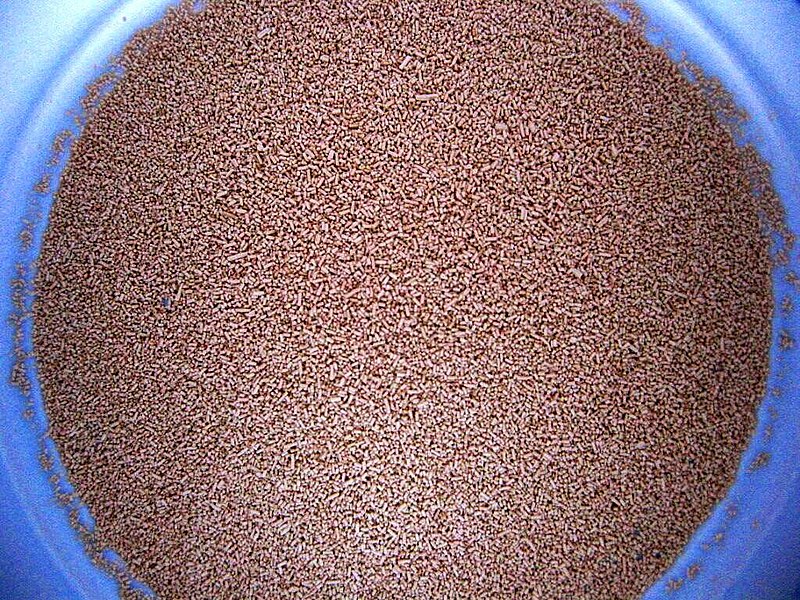
Yeast production has further evolved into full-scale industrial production, initially with the advent of blocks of fresh yeast, then granulated (dry) yeast, and now instant yeast*.


*If you bake and don't use instant yeast, you should. It makes the step of getting the yeast started in warm water or milk unnecessary. You just mix the yeast into the liquid, flour, and whatever else, and let the dough proof as normal. Way easier.

Different yeast strains have different characteristics that result in different flavors, and artisanal bakers may eschew packaged yeasts in favor of wild yeasts or sourdoughs that lend their bread the desired flavor profile. Similarly, brewers and vintners may select different yeast strains in the production of wine and beer in order to achieve a desired characteristic or facilitate a particular brewing method.

Next up: Yeast in the brewing industry.

Wednesday, October 21, 2009

The Real Problem with Rim-Brakes, and the True Nature of The Force

IMG_2796 If you only know me through this blog, you might not know it, but there are certain things about my life which are definitely “old school”. Here’s one: my mountain bike- both my “main ride” and my “back-up bike”- have rim brakes, specifically V-brakes. I’ve been riding my main ride* since 2004, and though I’ve upgraded a few components over the years- new fork(s), new rear shock**, tubeless rims- the basic set-up is the same.

*Ellsworth Truth. Great bike, so-so company. My frame is a replacement frame, now out of its (reduced to 2 year) warranty. When it breaks I’ll probably go 29”er.

** Cane Creek Cloud Nine. Best performing, most reliable, easiest-maintenance bicycling suspension component I have ever owned. Cannot recommend this product highly enough.

Over the last couple of years, other riders have commented on my “old school” brakes, and asked when I planned to “go disk”, to which my response is generally, “Why”? V-brakes are light, reliable, a cinch to set up and maintain, and in typical Utah riding conditions, brake just fine with 1-finger effort. But finally this year, I am forced to admit that I have found the Achilles heel of rim brakes.

Oh sure, sure. I can see you now, nodding your head all smarty-pants-like, thinking how he “finally got it.” You think I’m going to say something about braking power or wet braking or riding in snow or maybe even rim wear. Well you’re wrong- it’s none of those things.

Tangent: Especially not the wet/snow braking thing. Because why would anyone want to ride in the rain? Wet trails trash your cabling and components, hypothermia- yuck. What’s that? You live in someplace where it rains a lot/all the time? Yeah, that used to be my problem too. That’s why I moved to Utah.

Nested Tangent: This reminds me of a minor rant about boosterism and the Pac-Northwest. People in every “cool” part of the country love to work little proselytizing-testimonial-endorsements into conversations about how great it is where they live. We all do it- yes, including me*. Here in Utah, the most common testimonial endorsement usually relates to ski conditions and proximity. We love to say things like, “You can ski and golf in the same day!” Really? You really need to ski and golf in the same day? What are you, some kind of checklist-activity freak? OK, so I got up this morning, ran 5 miles, then I biked, then I skied half a day, then I did yoga, then I floated in the Great Salt Lake and then I went flyfishing. Tomorrow I’m going paragliding, skate-skiing and then panning for gold…

*But why do we do it? Are our egos really so tiny and fragile that we actually need affirmation from others regarding our choice of where we live? Why can’t we just say, “I live in Utah.” And when the listener says, “Yeah but you can’t get a beer there and women can’t vote and contraceptives are illegal…” or whatever, instead of going into some lifestyle-defense pitch, just say, “Yeah, you’d hate it. You should stay in New Jersey.”

Coloradans use this “ski and golf” line as well, but there it’s even sillier, because any day that includes both golf and skiing along the Colorado Front Range also involves at least 3 hours in the car…

flooded highway in pacific northwest In the Pac-Northwest, they go on about the beauty of the place and all the activities and how hip the cities are etc., etc. But sometime during the standard Northwest-Lifestyle-Testimonial, the victim- woops I mean listener- inevitably asks, “Yeah but doesn’t it rain a lot?” to which the testifier always says with a big smile, “Oh that’s OK- you get used to it! We just do stuff in the rain!”

Shamrock-Race-Rain I’ve heard that “do stuff in the rain!” line at least a dozen times from Pac-Northwest evangelists and I think it’s ridiculous. Doing stuff in the rain sucks. It sucks to bike in the rain, it sucks to ski in the rain, it sucks to run in the rain. The Pac-Northwest has a lot of good things going for it, but the copious rains is not one of them.

Seriously, it’s ridiculous. What if I told you I lived in this great place with beautiful scenery, nice people and low cost of living? And I was going on and on about how great it was. But you happened to know that the trails in this place were almost always covered in manure. And so after I’d been going on for a while you asked, “Yeah but, isn’t there a lot of manure on the trails?” And I smiled and said, “Oh that’s OK- you get used to it! We just do stuff in the cowshit!”

Dunetrack And snow? You don’t need disk brakes for snow- you need skis. Yeah, yeah, I know all about snow-biking. But it always seemed a bit like skiing sand dunes- fun to do as a novelty, but at some point a receding season is like an ex-spouse or your old Steve Miller* records- you need to let go…

steve-miller-band-greatest-hits-197-438511 *OK since I just made fun of Northwesterners and snow-bikers, I’ll share another embarrassing tidbit about myself. My iPod contains- and I frequently still listen to- Steve Miller’s Greatest Hits 1974 – 1978. Wait it gets worse- I just bought it like 2 years ago. We were having a neighborhood garage sale, and Hunky Neighbor put out a table of old CDs and I picked it up for a buck. I only play it alone, in the car, with the windows rolled up so I can sing along. One of my Life Goals is to figure out how to sing along to “Rock’n Me” without having to change octaves every time the chorus comes around.

Maple trailYeah so anyway, the weakness of V-brakes isn’t any of those things. Give up? Ok I’ll tell you- it’s Maple leaves.

Maples leaves get caught up in V-brakes and stick there. And even though they don’t slow you down, IMG_2982 they make that wildly-irritating card-in-spokes noise* that makes you think they’re slowing you down. I say Maple specifically because here in Utah when you ride over a trail covered with fallen leaves, those leaves are almost always Aspen, Maple or Oak. Aspen leaves never get caught- they’re too small and round. Oak leaves do sometimes, but Maple leaves are the worst. Wheel Maple LeafTheir broad, lobed form gives them maximum spread to lock into a V-brake, and their thin-ness means that when dry they easily get punctured by a tire lug, allowing them to be picked up and spun over and around into the brake.

*You can actually hear that “wildly-irritating card-in-spokes” noise in this video.

Oak trail Side Note: Oak leaves don’t seem to get picked up as often, and I’m convinced it’s because they’re tougher, thicker, and so don’t get lug-punctured as easily as Maple leaves. Also they don’t seem to drop their leaves all at once as Maples do, and so the trails generally aren’t “carpeted” with them as they often are with Maple leaves. But when they do get stuck in a V-brake, they don’t disintegrate, meaning that without manual intervention, they never come out.

Aspen trail As you might expect, mtn biking as often as I do, I think a lot about leaves this time of year. Whereas during the summer I tend to categorize trail types based on their form, grade and surface (smooth descent, fast singletrack, technical ledgy climb, etc.) in the late Fall I find myself categorizing them based on fallen leaf-type: Aspen, Maple, Oak or PLT.

DFir trailSide Note: If you look pay attention, you’ll notice that even “evergreen” PLTs drop needles in the Fall. Practically no tree is really “evergreen”; they just don’t lose all of their needles/leaves every year, which is which why botanists use the term “persistent” rather than “evergreen” to describe the foliage of things like Pines and Curlleaf Mountain Mahogany and Live Oaks.

Back East BTW, I remember the White Pines of Maine would drop a beautiful carpet of golden needles every Fall. I haven’t seen it probably 30 years, but I remember the floor of the pine grove around our cabin practically lit up with fresh needles.

So anyway, there are a lot of leaves on the trails- well on the ground, really- right now. What happens to all of those leaves?

On trails of course, they often get ground up by feet, paws, hooves or tires, but that’s not a real answer; you’re still stuck with lots of leaf bits. No, the real answer is that they get decomposed by an army of microscopic and/or creepy-crawly things, including earthworms, nematodes, insects, protozoans, snails and various bacteria, who eventually break down the dead leaves and other organic matter into soil components that can be used by plants. But the super-soldiers of this army, who do the lion’s share of the work of decomposition worldwide, are Fungi.

SymbiosisFP27 Throughout this blog we’ve bumped into Fungi from time to time. We saw them when we talked about the symbiotic relationship between mycorrhizal fungi and tree roots, and we visited them again when we talked about lichens.(pic below right, on oak bark. Species = Xanthomendoza montana.*) Except for mushrooms and lichens, you don’t see Fungi all that much, and that makes them easy to put out of mind. But that’s a shame, because Fungi are the connecting glue of the living world. Something like 70,000 species of fungi have been described, but this is thought to be only a fraction of all species.

*Thanks to Larry St. Clair of Brigham Young University for the ID. Larry has helped me out multiple times, he’s an awesome guy, and his lichen guide is the best around.

Lichen on Oak Jeremy Even when you do see them, Fungi are hard to get your head around for many reasons. But for me the 3 most important reasons, and the things that really distinguish them conceptually from the other 2 great kingdoms of multicellular life- plants and animals- are these: Fungi don’t have bodies, they don’t have individuals, and they have no real distinction between movement and growth.

EukaryoticCell4 Quick Reminder/Tutorial: Fungi are eukaryotic, like plants and animals. I explained the difference between eukaryotic and prokaryotic creatures (like bacteria) back in the lichen post. Short version: eukaryotic cells have a standard, complex ProkaryoticCell4structure including a well-defined nucleus, a membrane(s) and organelles. In addition to the 3 multicellular kingdoms, there are a number of unicellular eukaryotic kingdoms, including protozoans, algae and slime molds (which can sometimes be multicellular as well.)

No Body

When you see a mushroom, you’re not seeing the body of a fungus, but rather a specialized reproductive organ (which we’ll come back to in a moment.) hyphae The “body” of a fungus, usually called the mycelium, is a network of growing threads or filaments, called hyphae (pic right), that usually spreads and grows throughout something else, such as soil, wood or flesh. This lack of- or rather flexibility of- body lends itself to all kinds of intimate relationships with other living things. These can be symbiotic, mutualistic relationships, such as we saw with mycorrhizal fungi and lichens, or they may be parasitic, such as we saw with Dutch Elm disease. Closer to home, examples of parasitic fungi include Athlete’s Foot and yeast* infections (Candidiasis.)

*Yeasts are (usually) unicellular fungi.

Fungal_hyphae_620These hyphae may seem inconsequential, but they’re practically everywhere; the total mass of fungi has been estimated at nearly ½ a ton per acre across all vegetated land on the planet. You can dig up or scratch out bits, pieces and strands of hyphae, but you can’t really pick up and separate a real, complete “fungal body” distinct from the substrate (soil, wood, flesh, etc.) within which it lives. This is the first mind-bender of Fungi: it has life, it has mass, it has significant physical presence and scale- but it has no body*.

*Strictly speaking, I suppose one could argue that some specific fungi do have what could conceivably be considered bodies. Arguably, the fungal partner constitutes the “body” of lichens, and I have no idea about such past characters as the prehistoric maybe-fungus, Prototaxites.

No Self

Mycelia in many ways behave in manners we would associate with individuals- they eat and grow and mate- but probably “colony” is a better analogy; if you divide a given hyphal network in 2, then it’s 2 separate mycelia. This confusion of “what comprises an individual…” entered the public consciousness in the early 1990’s, when the “Humungus Fungus” was announced in Southern Michigan. This fungus, which was an “incidence” of Armillaria bulbosa (“Honey Fungus”), was estimated to cover >30 acres and weigh something like 10 tons. But it wasn’t really clear whether the Humungus Fungus should be considered a single living thing, a colony of living things, or a number of separate, extremely similar (possibly identical) things. In a sense a mycelia is analogous to a clonal stand of Oak or Aspen, but unlike those organisms, which have clear, individual components (i.e. trees), there really is no “fungal individual.” This is the second mind-bender of Fungi: complex, highly-evolved multicellularity without any real concept of an individual.

Growth and Movement

The third mind-bender for me about fungi is the lack of any real distinction between growth and movement. Animals grow and they move; the distinction is easy. Plants grow, and-for the most part- don’t move. But Fungi just grow. Or do they move? It’s not quite clear.

Root Cloning CaptionsSide Note: You can of course define plant growth as “movement” if you want to be more liberal in your use of the term. Plants grow toward light, and vines and creepers certainly achieve something that looks a lot like movement through their growth. And long-lived clonal stands of Oak or Aspen might well migrate along, up or down a hillside to the extent that after a 1,000 years or so the stand occupies a completely different spot than it did originally.

Fungi, like animals, don’t make their own food. They eat other stuff. And like animals*, they don’t wait for it to come to them- they go it. But they go to it by growing to it, and onto it, and around it and through it. This high surface-to-volume ratio makes fungi highly efficient at absorbing nutrients (eating.) While we’re on the topic of eating, you might think that fungi go through a leaf-litter eating/clean-up frenzy every Fall. But Fungi are busy whenever conditions- specifically moisture and temperature- permit. Most North American forests have many years worth of un-decomposed organic debris on/in the ground, ranging from around 10 years worth in Eastern deciduous forests to something like a 350 year backlog in Subarctic Boreal forest, where decomposition is limited by extreme cold and too much moisture**.

*Most animals anyway. Anemones are an obvious exception, and I suppose you could even argue the case for something like an Ant Lion or many spiders.

**Because frozen soil inhibits runoff.

Fungal Love

Aaah so what, you may be thinking. They still sound like plants of a sort. But if you’re not yet convinced that fungi are different- and BTW they’re more closely-related to us than they are to trees- then consider how they mate.

Plants mate at a distance, through mechanisms like flowers, pollen and such. Animals mate by physical contact*, achieved by going to each other. Like animals, fungi also mate** by going to each other. Same species mycelia connect and exchange genetic material by linking hyphae; they grow to each other. The mechanical specifics of these connections are probably as widely varied (or more so) as those in the animal world.

Fungal Love The genetics also vary; though sexually-reproducing species generally practice meiosis, many (most?) fungi use an alternating-generation haploid-diploid reproductive schema, similar to what we’ve seen with mosses, ferns and lycophytyes.

*Oh sure, there’s a bit of distance in the “last mile” contact in the mating of lots of animals, such as sperm transmission in fish or scorpions, but by and large these creatures are still going to each other.

**Sexual species that is. Many fungi reproduce asexually.

But that’s the simple part. The really mind-bending thing about fungal reproduction is a completely different concept of gender. Fungi species are either homothallic or heterothallic. Homothallic fungi can mate with any other fungus of the same species they bump into. But a heterothallic fungus can only mate with another fungus of the same species, but of different mating type. And here’s the thing- many species have more than 2 mating types- like 3, 4 or even more! As if that weren’t confusing enough, some species appear to switch mating types as they grow.

fungi1 Fungi don’t come above ground- or rather “out of substrate”- to mate, but they do so to propagate. When the 2 hyphae meet they grow a specialized organ, the mushroom (one of the few cases where fungi grow real organs), that serves to disseminate spores via wind or water.

So. They’re alive; they’re complex and evolutionarily advanced. They’re everywhere, and they serve as the linchpin of decomposition and material re-use that make the living world work. But they have no bodies, no individuals, no “self”, and somehow move without, well, moving. Fungi remind me of something.

The True Nature of The Force

star-wars-poster Like most geeky teens who grew up in the late 70’s and early 80’s, I loved Star Wars. I loved the action, the drama and the special effects, but most of all I loved the idea of The Force. An all-pervasive bodiless-yet vital thing, that connected all life, transcended any concept of individual, and to which we were somehow linked. I wanted, really wanted, the Force to somehow be real- not because I wanted to “worship” or gain spiritual guidance from anything, but simply for the sense of connection and commonality between all living things it hinted at. And I guess, deep-down, I still do.

As a skeptic, non-theist and general un-believer, I don’t believe in spirits or ghosts or “Forces”, and so IMG_2955The Force always remained a nice story, but nothing more. Until now. Because now I realize that there is a Force, that is real, that pervades and permeates the entire Living World and, in the big picture- bigger than me or my little worries or my short life- links us all together, to each other and to all other living things, through birth, growth, consumption, life and eventually death. That Force is Fungi.

When I roll across rotting leaves, The Force is with me.