Thanks again Phil, Kevin and Mark for an outstanding Guest Week. If I just had a few dozen more regular guest-posters, this project would be a piece of cake!
Yes, I’m back. But I was home for only about 12 hours. I’m on the road for work*, and then out of the country for a week. So while I’ve got lots to blog about from Mexico, it’ll be a few, maybe several, days before I can post. But I assure you that when I do post, I’ll have great stuff about birds, trees and an extended tangent about bribery and law enforcement personnel**. So hang tight.
*Actually a combined work/boondoggle, but that’s another story, for probably 3 or 4 posts down the road.
**Arguably my Best. Teaser. Ever.
In the meantime, just to share a couple of glimpses of my weird, hectic life, in the past 10 days I’ve gone from this:
And now, for the exciting conclusion of Guest Week, SkiBikeJunkie wraps up his Awesome Yeast Series!
Wine consumption dates back almost to the origin of civilization, with the first known wine being produced in what is today Iran. Wine was initially made from wild grapes, but these grapes were soon cultivated and selected to produce a sweeter fruit, which would, incidentally, also yield higher alcohol content when turned into wine.
Grape cultivation originated around the Mediterranean and was a meaningful part of life in ancient Greece and Rome. Each culture had a god of wine, known as Dionysus to the Greeks, and Bacchus to the Romans. The historical wine making regions in Europe today got their start with the Romans, who first cultivated grapes there. After the fall of the Roman empire, the only real social structure in Western Europe was the Catholic church, which maintained the vineyards and wine industry, as it was a key element of the Mass.
Wine was also produced in ancient Egypt, but the preferred drink of the lower classes was beer. Beer has been produced since at least the 6th century B.C., and is again believed to have originated in the Middle East, in this case, what is today, Iraq. Virtually any beverage containing carbohydrates such as starch or sugar will naturally ferment, so it is likely various civilizations invented beer independently. If one considers that the production of beer and bread is believed by many to be responsible for humanity's ability to develop technology and civilization*, beer production is almost like an example of convergent evolution, though unlike photosynthesis, it's something that the species does without it having become part of the genetic code.
*What, you may be wondering, does beer have to do with developing technology and civilization? If folks were just drinking beer all day long, it would be hard to get any real work done, right? Not so fast. Bear in mind that safe drinking water is a relatively recent phenomenon. Beer and wine, with their moderate alcohol content, were safe from pathogens without being overly intoxicating. Wine was often diluted with water, thus providing a safe, mild drink. Beer, moreover, because of it's basis in grains, became not just a safe beverage, but a significant source of calories in many societies. Of course the beer they were drinking wasn't Budweiser, and often resembled a thick soup or gruel more than the clearish, yellow beverage** advertised so heavily during sporting events. So it was more like drinking your bread than it is today.
**Described that way, it's not so appealing.
Beer and wine making both appear to have begun with the use of wild yeasts. In the case of wine, the yeasts naturally occur on the skins of the fruit, so as the grapes are pressed, the yeast naturally becomes part of the juice, enabling the fermentation process. For beer, the process is similar to sourdough, where airborne yeasts were first used, but brewers quickly discovered that reusing the same barrels for fermentation that had been used in the last batch yielded better results. Thus they began cultivating their own yeasts, and using specific barrels (strains) for specific varieties of beer. Similar to breadmaking, the process was refined over the years to derive better, more consistent yeast cultures.
Both beer and wine can be brewed using wild yeasts and some still are today. Many European winemakers insist on using the wild yeasts even though they can cause inconsistent results and sometimes even spoilage in the resulting wine. Lambic beers, produced in Belgium in and around Brussels, are brewed using wild yeasts native to that area. Lambics are often blended with fruit juice or syrups to create a beer with a very distinctive, sweet, fruity flavor. More often than not, however, beer and wine are fermented with cultivated "sugar" yeast, most often S. cerevisiae*, the same stuff bakers are using to make their bread rise, and its cousin, S. uvarum*, the first yeast cell to be isolated back in the 1800's by Emil Hansen at the Carlsberg brewery in Denmark***. *Almost certainly derived from Ceres, the Roman god of the harvest, which, incidentally, is the same root for the Spanish word "cerveza," meaning "beer." **Formerly known as S. Carlsbergensis in honor of the brewery at which it was discovered. ***My ancestry is predominately Danish, which makes me feel like I should drink Carlsberg beer in honor of my heritage.
OK, so we've talked a bit about where beer and wine came from and how they came about, but enough of the history lesson already. This is supposed to be a science blog. Let's get to how yeast turns grape juice and cereal into alcohol and carbon dioxide. But since I majored in English and have been racking my brain all week* trying to figure this stuff out, we're going to do the butcher paper and crayons version.
*Seriously, after this one guest post, I have no idea how Watcher does this blog and finds time to ride his bike and finds time to read books to his kids and finds time to go to work and finds time to spend with his awesome wife** because this was seriously a hell of a lot of work***, a far cry from the lunch hour stream of consciousness missives that are the bread and butter of my (pathetic by comparison) blog that may occasionally entertain but never even begins to inform in a meaningful way.
**My family and I have spent time on a few occasions with Watcher, Awesome Wife, and the Trifecta. And as Awesome as Watcher describes AW as being in this blog, it is nowhere near as awesome as she is in real life. The Watcher family is a good bunch of folks. ***And I didn't even bother to put together a single awesome graphic. Seriously, how pathetic am I?
The simple explanation, in language that I understand and using metaphors with which I am well acquainted, is that the yeast eat the sugar in the grape juice/wort/dough/whatever else is being fermented. When they eat the sugar, it gives them a little flatulence, which is CO2, as well as makes them have to pee, which is ethanol. This is a way dumbed-down version, but puts it into terms that make sense to me.
The real, slightly more scientific description of the process is that two steps occur, glycolysis and fermentation. Glycolysis is the process by which one glucose molecule is broken down into two pyruvate molecules, in the process releasing ATP* and NADH, which the yeast cell can use for energy. Glycolysis is considered the archetype of a universal metabolic pathway--glucose as well as most monosaccharides can be converted to intermediates that follow this series of reactions.
*I learned about ATP synthesis in AP biology in 10th grade (I don't remember a thing about it). It's the only biology class I've ever taken, and I somehow got an advanced degree without ever having taken chemistry. Ever. I was able to satisfy the physical science requirement in high school by taking physics, which I should have failed but passed on a technicality. Were it not for that technicality, I would not have graduated high school. Which would have been embarrassing, since I conducted the graduation ceremony.
The pyruvate is then converted to acetylaldehyde and CO2. The NADH produced during glycolysis then reduces the acetylaldehyde to ethanol, leaving ethanol and CO2 as by-products. The ethanol remains in the beverage, which is what makes people feel relaxed when they drink it. The CO2 only dissolves in the beverage if there is an additional fermentation and the container is pressurized to ensure it doesn't escape. Regular wine does not have this second fermentation, but sparkling wine* does. If it is bubbly, the bubbles will make you happy. *Sparkling wine, like so many culinary wonders, is the result of a happy accident, originally an error on the part of the winemaker. The wine was fermented in conditions that were too cold. It began fermenting in the fall, producing the ethanol. Then it got cold enough during the winter that fermentation ceased, but began again in the spring when temperatures rose, resulting in the second fermentation that led to the dissolved CO2. Until the invention of the wire cage to hold the corks in place, cellaring Champagne was a dangerous prospect, with corks arbitrarily popping, leading to a chain reaction that could destroy an entire cellar of product.
The bubbles in beer may come about as a result of an additional fermentation in the bottle (known as bottle conditioning) or in the cask (known as cask conditioning). They may also be added artificially by injecting CO2 into the finished beer, which is, incidentally, the most common method of making it bubbly*.
*Beer served on tap is typically served from a keg pressurized with CO2. The CO2 pressure forces the beer out of the keg and makes it bubbly at the same time. Nitrogen can also be used to pressurize the keg, so a beer served "on nitro" is using this technique. Since the beer is not cask conditioned in this case and nitrogen does not dissolve in beer, nitro beers will have a head of very fine bubbles but will not have bubbles in the beverage itself.
The same fermentation process occurs in bread dough, with the CO2 forming air pockets that become the holes in baked bread. Since the chemical process is the same, ethanol is also a by product, however, because the bread is then baked, the ethanol evaporates during baking.
Regular, commercial yeast (S. cerevisiae) does not like an acidic, or sour, environment. If bacterial activity creates too much acid, this yeast will die and make your bread taste funny. It will have an ammonia-like aftertaste and a weakened gluten structure. Wild yeasts, on the other hand, prefer an acidic environment, which is why they coexist well with the bacteria in sourdough. The bacteria create lactic and acetic acids, lending the dough its unique flavor, but this process requires about twice as long as the yeast needs to leaven the dough. A hearty yeast strain is needed to endure that long, another reason the wild varieties are preferred to the cultivated yeasts when making sourdough bread.
Punching down dough is a typical part of the bread making process and accomplishes four things: 1) it expels CO2, which would eventually otherwise choke off the yeast; 2) it allows the gluten in the dough to relax a bit; 3) it equalizes the temperature, which is typically higher inside the dough than outside; 4) it redistributes nutrients to the yeast, thereby kicking off a new feeding cycle.
Yeast are hungry critters, but then again so are we. And we wouldn't eat nearly as well as we do without them. So next time you nibble on a crust of bread, make sure and raise a glass to these little fungi that invisibly work to make eating and drinking so much better.
Wow- what a post! And a what a week! Thanks Phil, Kevin and SBJ for an awesome Guest Week!
Today’s guest-poster is none other than the inimitable SkiBikeJunkie. I’m a regular reader of his blog, probably the best-written of Utah’s numerous bike-ski blogs, which covers of course his skiing and biking adventures, but also observations on everything from work to philosophy to school-mom attire. If you haven’t yet checked it out, you should.
I’ve mentioned before that I have a list of things I want to blog about before completing this project. For some time yeast has been on the list, and I’m grateful to SBJ for tackling it in full force with this awesome* 2-part series.
*It not only has tangents, but even a Half-Baked Theory!
The Post
When I told my wife I was doing a guest post about yeast, she informed me that the first thing she thinks of when she hears yeast is yeast infection. I can't imagine she's alone in this. Because she, being quite a skilled baker, should have a lot of interest in yeast aside from the kind that can get a little out of control down there. But even though she's cultivated her own wild yeast for sourdough starter, I guess the discomfort of a yeast infection was what she thought of first. Who can blame her?
Extra detail: Yeast infections are primarily from the Candida genus, hence the name Candidiasis for a yeast infection. They're in the same family as the yeasts used for brewing beer and baking bread but a separate genus (just in case you were starting to feel icky about beer or bread). Candida is a naturally-occurring commensal* in many mammalian species, and a yeast infection is evident not based on the presence of Candida but rather an overgrowth of the yeast. In other words, it's there all the time, it's just that sometimes there's too much of it, it penetrates the mucous membranes, thereby causing irritation. This same annoying yeast is also the cause of diaper rash.
*I didn't know what this word meant either. It's a class of relationship between two organisms wherein one benefits and the other is unaffected. Not to be confused with parasitism, wherein one benefits to the detriment of the other; competition, wherein both are harmed; or mutualism, wherein both benefit. Incidentally, symbiosis and mutualism are often confused. Mutualism is actually a type of symbiosis, as are commensalism and competition. How's that for disambiguation?
Extra, extra detail: Sourdough isn't just yeast, but rather a combination of wild yeast and bacteria. In the case of San Francisco sourdough, the most famous variety, the yeast is typically Candida milleri, and the bacteria is Lactobacillus sanfrancisco, both of which play a unique role. The yeast strengthens the gluten, while the bacteria ferments the maltose in the dough, generating acid in the process and giving the dough its distinctive flavor. Typically the ratio of yeast to bacteria in San Francisco sourdough is ~1:100.
Aside from causing irritation in the most inconvenient of places, yeast is way, way cool. And not just because it makes bread fluffy and beer bubbly, though we'll get to that part too. Culinary applications were, after all, the reason I was interested in this post, but since I learned some cool stuff along the way, we'll use that as background for the culinary uses.
Tangent: The first time I heard about yeast infections was when I was in high school. Not through first-hand experience, but when one of my friend's mom told us about the time her husband was on shore leave from the Navy after six months right when she happened to have a yeast infection. Being the good Navy wife that she was, she didn't tell him about it and just endured the discomfort. I hope she took advantage of a yeast by-product beforehand to distract her from the pain a bit.
Yeast is part of the Fungi kingdom. Baker's yeast, Saccharomyces cerevisiae, was the first eukaryotic organism to have its complete genome sequenced. Unlike many fungi, however, yeasts are single-celled organisms. When I first mentioned doing a post on yeast to Watcher, he mentioned that yeast are cool because they evolved from single-celled to multi-cellular and back to single-celled organisms. I couldn't find any research on the topic, so if you know anything about this, please speak up in the comments.
SPECIAL WATCHER NOTE: I told myself I wouldn’t enhance or edit any guest-posts, but this topic is just too cool to pass up. Yeasts almost certainly evolved from multicellular fungal ancestors, and, like just about everything really cool in nature- from flight to eyes, to tapeda lucida to C4 photosynthesis- have done so multiple times independently, in multiple fungal phyla/sub-phyla. A number of fungal species actually exhibit both yeast and multicellular forms. One particularly insidious example is Penicillium marneffei, a pathogen which afflicts roughly 30% of AIDS patients in Southeast Asia. The switch between P. marneffei hyphal (multicellular) and yeast (unicellular) forms is temperature. At cooler temps it grows hyphally, but at higher temps, such as human body temperature, it grows as a yeast, and this form is the possibly fatal one. There’s actually a word for this switch from hyphal to yeast forms: arthroconidiation.
Anyway, yeast are able to reproduce asexually by budding, but they also create spores in a sac called an asci wherein ascospores are produced which may combine with other ascospores for sexual reproduction.
Yeasts occur naturally as part of the skin, gut, and mucous flora in animals as well as on the skins of fruits. They are also found on plant leaves and flowers, soil, and salt water. They're all over the place, as some are likely growing right now on the surface of the leftovers in your fridge. As these yeasts grow and metabolize food, the character of the food changes, resulting in spoilage (that dry-aged beef that tastes so awesome at the high-end steakhouse tastes so good in part because of a fungus that grows on the exterior during the aging process without spoiling the meat).
Approximately 1500 species of yeast have been described, but this is believed to be less than 1% of yeast species (if you're interested in having a species named after you, identifying and describing a yeast species may be your best opportunity). Yeasts were also one of the first species to be cultivated, which leads to my half-baked theory about grasses, yeast, cattle, and human evolution.
Half-baked theory: humans would not have evolved to be as successful as we are (however successful that is) without grasses, yeast, or cattle (pic left=actual photo of some of SkiBikeJunkie's uncle's herd of cattle). We get a majority of our nutrition--either directly or indirectly--from grass species (rice, wheat, maize, barley, and sugar cane are all grasses). Much of the nutrition we get directly from grass involves yeast in the production. Much of the nutrition we get indirectly from grass, we rely on cattle (or sheep or goats, but primarily cattle) to turn the protein in grass into a form usable by humans.
Humans wouldn't have evolved without grass. And I don't think humans would have used grass as successfully as we have for nutrition without yeast and cattle. Interestingly enough, it's a single yeast species, Saccharomyces cerevisiae, that's used for making bread, beer, and wine.
Unfortunately, when and how yeast was first cultivated is a mystery, but the first record of its use in bread is from ancient Egypt. We're left to speculate that dough was left out longer than normal on a warm day, the naturally-occurring yeast in the flour was activated, and the bread that was baked was lighter, fluffier, and tastier than the hard, flat cake of the day. Another, equally probable explanation is that the baker used wine or beer as the liquid in bread, likewise resulting in a leavened loaf. Obviously this was something to try and replicate, and the use of yeast in bread making began.
This naturally-occurring yeast could have been used for subsequent loaves by saving some of the old dough, just like a sourdough starter, to begin the leavening process in the new batch. Records show that the use of yeast as a leavening agent occurred in close proximity to the beginning of beer brewing, so it's also possible that the barm* (the foam or scum that results from alcoholic fermentation) from beer brewing could have been used as an early source of yeast for bread making, thus negating the need to use the wild strains. *Sourdough starter is also known as a barm.
Early bread bakers lacked the benefits of modern microbiology and so would have cultivated their yeast strains based on trial and error. Again, yeast cultivation paralleled brewing, as the yeast cultures often began from the "emptins" or dregs from beer and cider fermentation. These cultures were grown in a medium similar to the wort used when brewing beer, and, interestingly enough, were preserved in a similar manner to keep bacteria from contaminating the cultures by boiling or adding hops to the medium.
Tangent: One of the things I find most interesting about science is that so often it's not used to find new information, but rather to explain why folk wisdom works the way it does. This is especially true in athletic training. Exercise science very rarely comes up with new workout regimens. Instead, it explains why the workout regimens used by successful athletes and coaches are effective. Certainly once the foundation of why something works is established, that technique can be innovated and enhanced, but again, it's more likely that science is catching up by explaining what the top athletes are doing rather than providing them with new ideas.
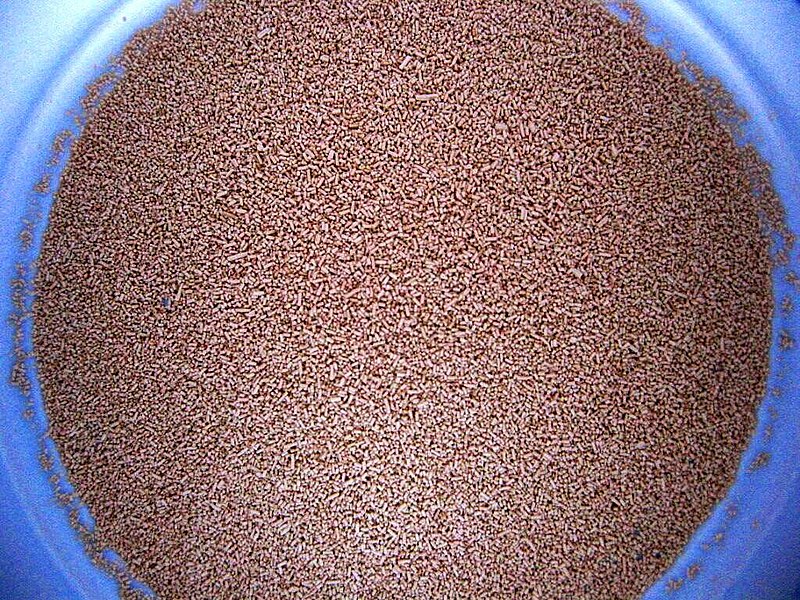
Yeast production has further evolved into full-scale industrial production, initially with the advent of blocks of fresh yeast, then granulated (dry) yeast, and now instant yeast*.
*If you bake and don't use instant yeast, you should. It makes the step of getting the yeast started in warm water or milk unnecessary. You just mix the yeast into the liquid, flour, and whatever else, and let the dough proof as normal. Way easier.
Different yeast strains have different characteristics that result in different flavors, and artisanal bakers may eschew packaged yeasts in favor of wild yeasts or sourdoughs that lend their bread the desired flavor profile. Similarly, brewers and vintners may select different yeast strains in the production of wine and beer in order to achieve a desired characteristic or facilitate a particular brewing method.
Today’s Guest-Poster is long-time reader and commenter Kevin Vigor. Kevin is the only Guest-Poster I haven’t met in real life. But from comments and email correspondence, I feel that I know him reasonably well. Specifically, this is what I know. Like me, he is a cyclist, rationalist and non-native Utahn who lives in Salt Lake City (our children attend the same school) and works in the IT industry. Unlike me, Kevin originates from Gondwanaland. I’m pretty sure he told me once he’s from South Africa. I could be mistaken, but in any event I’m pretty certain it’s one of those Southern hemisphere countries where people talk funny and routinely fight off large reptiles with garden implements.
I mention this because it explains the spelling errors discrepancies peppered throughout his post- favour”, “behaviour”, “fibre”, etc., which I fought off my American spell-checker to leave intact (and which should no doubt please Fellow Funny-Speller P65.)
Kevin’s got a great and timely post. A couple weeks back, when posting about Mars, I mentioned how hard it was for me to get my head around the idea of an entire planet where nothing ever happens. In this post, Kevin takes up that mind-bender at a whole other level: why life- or most anything at all- happens in the universe as a whole. The post isn’t technical, but it does require a bit of focus and attention to follow along, so maybe have a cup of coffee first, answer those couple of urgent work-emails, close your office door, look busy* and dive in.
*I always wear my phone headset when reading good posts, so co-workers will think I’m on the phone.
It also happens to contain probably the brainiest Nested Tangents yet in the history of this blog.
The Post
The universe appears, at first glance, to be a rather inhospitable place. It's mostly empty, bleak and dark, and the few not-empty bits are mostly extremely hot balls of exploding gas, massive unstoppable black holes devouring less fortunate objects, or sad, desolate rocks waiting their turn in the black hole. So it would be easy to conclude that life, clinging precariously to a small blue rock circling a rather undistinguished star, is an astonishing thing, a triumph over unspeakable odds, an inexplicable fly in the dismal broth of infinity.
But it turns out that quite the opposite is true. The universe has stacked the deck in our favour. And not just a little - the game is rigged to an astonishing degree. According to the standard model of physics* the universe has about twenty initial parameters. These are things like the mass of a neutron, the charge on an electron, and so forth. These are the values which determine the behaviour of the cosmos. As far as we know, they were set at the beginning of time and are completely arbitrary. Why aren't electrons the size of baseballs? Well, we don't know of any reason. Nor do we know why they are the size they are. We simply have to measure and observe these parameters. But when we do that, we come to a startling discovery: these initial parameters are very precisely tuned to result in the complex, structured universe that is necessary for life. Even tiny deviations in any of these parameters would lead to conditions where we, or life as we can envision it**, could not exist.
*I love this name; I envision a worn-down universe salesman wearily trying to sell add-ons to the suave and dapper creator: how about the moon roof? Nope, says the creator, picking lint from his lapel, just the standard model. C'mon, buddy, how about the power ashtrays? Nope, just the standard model.
**In a paper regarding the possibility of false vacuum collapse, which would result in an instant reshuffling of those initial parameters of the universe, we find this lovely quote: "...in the new vacuum there are new constants of nature; after vacuum decay, not only is life as we know it impossible, so is chemistry as we know it. However, one could always draw stoic comfort from the possibility that perhaps in the course of time the new vacuum would sustain, if not life as we know it, at least some structures capable of knowing joy. This possibility has now been eliminated."
For instance, consider the 'alpha' parameter (also known by the far more mellifluous name 'fine structure constant'). Alpha describes (in some manner far beyond the understanding of your humble author) the strength of the electromagnetic field, i.e. the force exerted between charged particles like protons and electrons. It is a dimensionless constant; like pi, no matter what units of measurement you use, the value is identical.
Tangent: I find the idea of dimensionless universal constants like alpha and pi fascinating. It wobbles the mind to realize that any intelligent life anywhere in the universe knows the value of pi and would recognize it if we presented it to them. It's quite literally universal truth.
Nested Tangent: It is interesting to contemplate how one would go about presenting the value of pi to an alien intelligence, presumably as a demonstration of our own intelligence. It's easy enough to communicate integers; assuming we had a simple on-off blinking mechanism like a light we can simply transmit bursts of flashes separated in time. But pi, being irrational, is harder to communicate. '3' isn't exactly precise enough to get the job done and I cannot think of any way to communicate irrational numbers over such a limited channel without introducing the concept of the numeric base. As I'm sure you know, dear reader, we are accustomed to using base ten in our daily counting needs, but there is no reason to suppose an alien would use such a system. So first we would have to communicate the base we are using. Having thought about this a bit, I came up with the following scheme: transmit the prime number sequence, which again should be universally recognizable, using a longer interval to separate the values and a shorter interval to separate the digits in each base-ten number. So, with space representing the long interval and dash the short, we would transmit: * ** *** ***** ******* *-* *-*** (1, 2, 3, 5, 7, 11, 13...). This should unambiguously establish the fact that we are using base ten. With that established one could then begin transmitting the digits of pi in base ten (*** * **** * *****....) with some certainty of being understood. OK, perhaps that was interesting only to me, but if you can think of a better or more universal way to communicate irrational numbers to aliens I'd be delighted to hear it.
Of course, we know many ways to derive the value of pi (including the incredibly freakyBBP Algorithm, which lets you calculate any digit of pi without calculating the preceding digits - think on that a moment!) and we cannot envision a reality in which the ratio of a circle's diameter to its circumference is any different. Unfortunately, we have no idea how to calculate alpha, but can only measure it, and can easily envision universes in which it had a value different than the approximately 1/137* that it is in ours.
*Richard Feynman, the most entertaining physicist ever, had this to say about alpha: "It's one of the greatest damn mysteries of physics: a magic number that comes to us with no understanding by man. You might say the "hand of God" wrote that number, and we don't know how He pushed his pencil." He wasn't the only one fascinated by the number, either; Sir Arthur Eddington, a preeminent astrophysicist at the turn of the 20th century, constructed long numerological arguments to "prove" that alpha was exactly 1/136. When experiment revealed the actual value was close to 1/137 he hastily reformulated his arguments to "prove" it was precisely 1/137. Alas, truth refused to be quite so neat.
So - what would a universe with a different fine structure constant look like? To understand at least one ramification of this, we must consider the structure of an atomic nucleus. In the nucleus of anything more massive than hydrogen there is a desperate struggle of forces: the positively charged protons repel each via the electromagnetic force, while the strong nuclear force tries to hold them together. So if alpha, which indicates the strength of the electromagnetic field, were larger, the protons would repel each other more strongly, and in the absence of a corresponding increase in the strong nuclear force (another of those pesky initial universe parameters) the atomic nuclei become more unstable. In our universe, elements with up to about 92 protons in the nucleus (uranium) are reasonable stable; but with only a very small increase in alpha no element except hydrogen can exist for any length of time.
So even small increases in the value of alpha spell disaster for life, unless you fancy the idea of trying to assemble sentience armed only with varying densities of hydrogen.
What then, you might ask, if alpha were to have a lesser value? It probably won't surprise you that the answer to that is disaster also, though of a more subtle form. One must consider that the electromagnetic force has another enemy: gravity. Stars burn because gravity becomes strong enough to overcome the electromagnetic repulsion between hydrogen nuclei, fusing them together into helium (and by happy coincidence releasing an enormous amount of energy in the process). So if alpha were less, gravity would be relatively stronger, and smaller bodies would burst into flame, their puny electromagnetic resistance crushed under the iron heel of gravity. One doesn't have to dial alpha down very much before Earth-sized bodies start igniting, which makes things hard on the inhabitants. Worse, the lifetime of the resulting tiny stars is dramatically shorter than the stars we know, curtailing the time available for life to evolve. In short, the resultant universe isn't very conducive to the creation of pizza, carbon fibre bikes, and all the other things we take as requirements of sentient life*.
*There are numerous other subtle and awful effects of dialing down alpha: "Just Six Numbers" by Martin Rees does a fantastic job of explaining just what a bad idea that would be, in case you were inclined to give it a try.
So it turns out alpha is very nicely tuned to support just the kind of universe we need, one with lots of stable elements and stars which burn long enough for us to evolve.
And it turns out that the rest of those twenty-odd initial parameters I mentioned before? Yeah, same story all over. Even the most tiny of tweaks to something like electron mass is pure ruination. This universe looks an awful lot like it was set up at the very beginning just exactly for us.
The first guy to comment on this was an American physicist by the name of Robert Dicke, who pointed out what came to be known as "Dicke's Coincidence"* in the 1950s. But the first guys I know of who really ran with the idea were John Barrow and Frank Tipler, in their 1986 book, "The Anthropic Cosmological Principle". It's well worth reading (though be warned that while most of it is layman friendly there are passages of heavy math that left me bewildered) - they devote an amazing amount of effort to demonstrating just how fine-tuned the universe is to support our existence, and to my knowledge those conclusions have held up well, in the sense that most cosmologists agree (though of course, there are still some who differ**). After demonstrating at considerable length the unlikelihood of our cosmos, they then turn their attention to the obvious question: Why do we find ourselves in such an unlikely place? Here, things get a lot more contentious.
*insert puerile snigger here.
**Barrow and Tipler base many of their arguments on the processes that lead to formation of carbon, which is certainly essential for life as we know it, and which is indeed very sensitive to the initial conditions of the universe, but some contrarians accuse them of 'carbon chauvinism' and suggest other forms of life might arise in differently tuned universes.
Barrow and Tipler offer three variants of the 'anthropic principle'. The Weak Anthropic Principle is really a simple little tautology of the sort a fifth grader might find clever: if the universe *weren't* tuned to support life, we wouldn't be here to observe it; therefore, we should not be surprised to see it, no matter how unlikely it might be. It's certainly a difficult argument to refute, but it is very unsatisfying. Further, it requires either a massive and unlikely (Dicke's) coincidence* to explain how the one and only universe just happened to be so awesome, or else that there be a very large number, perhaps an infinity, of different universes with different parameters. Some credible cosmologists (like Martin Rees) posit this latter theory, commonly referred to as the multiverse theory. They suggest that the vast majority of many, many parallel universes are lifeless, sterile places, but that the sheer number of them explains the coincidence of ours. Such people thus find the Weak Anthropic Principle sufficient. But not Barrow and Tipler**. They keep on going to our next stop, the Strong Anthropic Principle.
*More puerile sniggering.
**Nor, for that matter, do I. While I am hardly qualified to have a real opinion on the subject, invoking the enormous elaboration of an infinity of parallel universes just so we can have ours seems such a shockingly inelegant, brute force solution that I can hardly bear to contemplate it. I prefer my cosmology with just a tad more grace, thanks all the same.
The Strong Anthropic Principle states that a universe, any universe, *must* at some point contain life. Proponents of this position usually point to quantum mechanics, where observers play a special, magic, spooky role. Schrodinger's cat is both alive, and dead, and neither, until someone looks in the box. And observers, we assume, must be alive, and probably sentient at that. So we know that the mere presence of life alters the behaviour of reality in a very deep and very non-obvious way. It is possible, then, that the universe cannot function properly without observers, and so therefore that it must produce us, or not exist at all.
This argument is quite compelling, but it has its flaws. First, it is not universally accepted that observers really do have such a magic privileged role in reality. Heisenburg's interpretation of quantum mechanics (usually wrongly called the Copenhagen interpretation) grants us this exalted status, but there are many other interpretations, some of which do not. Second, and perhaps more seriously, it simply defers the question. Sure, a universe cannot exist without us - but how did it manage to come to be? We should not be surprised to find ourselves in a universe well suited to ourselves, the Strong Anthropic Principle says, but feel free to continue to be astonished that a universe exists at all. This turns out to be insufficient to satisfy Barrow and Tipler, so they press on, arriving at what they term the Final Anthropic Principle. Which is, in a word, creationism. They spend a lot of time dancing around it, but in they end, they strongly suggest that the existence of our unlikely universe is evidence of an intelligent creator (others following in their path areless reticent). Well. That's a damn unsatisfying result. What a long way we've come, how carefully we've studied and observed and measured and reasoned, only to defer explanation to a magic fairy? The whole thing feels like cheating. It's worse than an M. Night Shyamalan movie*.
*Spoiler - it's the trees!
But what's the counter argument? What, other than some intelligent creator, can possibly explain the beautiful, delicate balance of a universe where carbon and oxygen not only exist, they come together in the form of J boats and whiskey and Angela Gossow and other exquisite delights?
Well, Lee Smolin is glad you asked. In his 1997 book, The Life of the Cosmos, Mr. Smolin suggests a wonderful, elegant alternative. The book is in many ways horrible - Mr. Smolin is not a terribly gifted author, often didactic, and the book feels like several unrelated pieces awkwardly jammed together, some of which were written for an audience far smarter than I ("now, as you recall from your exhaustive knowledge of gauge theory..."). But despite that I cannot recommend it enough, purely for the sheer wonder of the central idea. It's so lovely and so novel that I feel bad giving it away here. But just to give you a hint...
[SPOILER ALERT]
Smolin's central idea is that the constants of nature evolved by a process of natural selection. Just as natural selection in biology led to the beautiful and wildly diverse life we find about ourselves, so did a process of cosmological natural selection lead to our bizarre and wonderful universe. I cannot possibly do the argument justice here - it involves universes spawning though black holes and every time I try to explain it it sounds completely unbelievable. But then so does the germ theory of disease - you mean there are little living things that are too small to see? And they're everywhere? And if they get in me, they make my nose run? Dude, are you even trying to be reasonable here? Trust me, Smolin does a better job of making the idea plausible. Compelling, even.
So, if Alex is fool enough to publish this, and I've managed to pique your interest in the rather insignificant matter of why the hell we're here, get to the library and grab a copy of Smolin's book. It's an adventure for your mind, a triumph of rationalism, and with the weather apparently determined to keep us indoors the next week or so, you'll have the time on your hands.
It’s Guest Week at Watching the World Wake Up. The Watcher Family is in Mexico this week, so 3 regular readers are filling in for me while I’m away. Today Phil O. blogs about his yard, tomorrow Kevin Vigor blogs about the universe, and Wednesday and Thursday* SkiBikeJunkie brings us a Yeast Tour-de-Force.
*There’s no Friday post. Blog traffic is always light Fridays and weekends. These guys went to a lot of work to do this for me; I’m giving them the high-traffic days.
Remember 2 things while I’m away: First, our other brother, Ray, is staying at the house. He brought that damn dog of his along again, so be careful if you stop by the house unannounced this week. Second, I get back late Sunday night, then embark Monday AM on another trip- the 2nd of 3 this month- so posting will continue to be sporadic.
Today’s Guest-Poster is- as perceptive longtime readers may have already discerned- my little brother*. He’s like me except that a) he’s nicer, more interesting and more fun- seriously, if you’re going to invite one of us to a party, pick him b) his eyesight sucks. The guy is like blind as a bat, and c) he’s not an OCD-outdoorhead.
*Have you noticed that when an older brother introduces a younger brother, he refers to him as his “little brother”, but when the younger brother introduces himself, he uses the term “younger brother?”
The Post
Hi all. It’s an honor to be asked to guest-post at Watching the World Wake Up. I’ve been following this blog since its inception several years ago, and while I’ll admit to only understanding 30% of it, that’s more than I understand about Lost over a similar period of time.* I look forward to new posts to learn more about the world around me, see cool helmet-cam videos, and of course check to see if I’m referenced in any tangents. Over the course of my life, I’ve learned many things from the Watcher, like how to perform basic maintenance on a 10-speed, how to interview successfully for a job, and how to be a new Dad who stays in the good graces of a new Mom (short version: get up at night when the baby cries). Reading Watching the World Wake Up gives me the chance to continue my education.
*Seriously, she hits her head and forgets how to speak English? Didn’t our collective ability to suspend disbelief for that kind of thing go out with Anna Anderson and/or every season of General Hospital?
Before I go much further, I should introduce myself. Yes, I am the Watcher’s younger, better-looking brother. It’s true. However, if you imply that I got this guest-hosting job through some sort of nepotism a la Robert F. Kennedy or Kim Jong Il, I want to assure you that this was purely a merit-based appointment, like Melissa Rivers or Liz Cheney. If you maintain otherwise, I will sue you for libel in Singapore.
You’ve learned a lot about the Watcher over the years. He lives in the West, he’s a fiercely competitive biker, he works in sales, he has an Awesome Wife and a flock of good-looking children. He also has a keen interest in and understanding of the natural world around him. I’m just like him, except I haven’t gotten on a bike since 1992,* I live in the suburbs of a large northeastern city (not the one in the photo – the other one), and I detest sales reps. I do, however, have my own Awesome Wife – an attorney who specializes in affordable housing – and we have our own Alpha Baby, a girl born last October. I currently keep busy with work, which takes me to Canada far too often (not that I mind – it’s a pretty nice place), and with school, pursuing my MBA part-time (I have a slightly higher tolerance for school than some members of my family).
*I biked a lot from 1987-1990. I probably have gotten on a bike once or twice since 1992, but only in a limited sense; I definitely haven’t ridden two consecutive days since 1991. As a teenager, I did some serious biking, participating in summer trips down the entire West coast (Seattle to San Diego), for example. I was in good shape and I made some great friendships (Mike Rock, where are you now?) and developed crushes on several good-looking athletic women (whom I periodically stalk nowadays – thank you, Facebook). I really enjoyed biking. But I figured out pretty quickly that a car gave a high school boy a huge advantage when it came to dating. Basically, girls did not want to get picked-up by guys on bikes, or guys whose parents were driving the car to the movie theater. So long, bike.
Unfortunately for devoted readers of this blog, I can’t add to my brother’s significant expertise in the natural world around us. If I wanted to focus on things in which I have expertise, I’d be writing about obscure1970sbands, obscure 19th-century Presidents, or eras of English history most Americans have never heard of. But I don’t want to lose all of the Watcher’s loyal readers in one fell swoop. Instead, as a relatively new suburban homeowner, I thought I’d talk about the principle way in which most suburbanites interact with nature: in their yards.
The Watcher and I grew up in New England, but like my brother, I moved away after college. I lived first in New York City, and then – after tricking my Philadelphia-raised girlfriend into marrying me – in central California, home of Steinbeck and K-Fed, south of Fresno and north of the most depressing place on earth, which is a good topic for a future guest post (if I ever get the opportunity, and I am not too busy being a highly sought-after guest-blogger on other popular blogs). Finally, in 2008 we decided to move back to New England, and bought a small Cape on a half-acre of land in a charming town of ~30,000.
Now, the nice thing about my house – apparent from the photo here – is that we border on a large area of protected woodland. In fact, I’m not really sure where my property line ends, although if you bushwhack a hundred yards or so, you will hit a well-traveled trail, so I’m assuming it ends before that. (If it doesn’t, I should setup a little tollbooth to help pay my property taxes). There are a lot of nice things about bordering on the woods, including:
- Great scenery in all year round (see photos from various seasons)
- Easy, relatively green-friendly way to get rid of yard waste (leaves, weeds, etc.)
- Occasional glimpses of wildlife (rabbits, deer)
There are downsides, too:
- While leaf disposal is easy, we get an extra large share of leaves dropped on the lawn each fall
- The woods are regularly encroaching on the yard and need near-constant taming – vines, branches, plenty of weeds, etc.
- Those glimpses of deer aren’t without inconveniences. Minor inconvenience: cleaning-up occasional deer scat. Major inconvenience: contracting Lyme disease less than a month after moving in, after a day spent valiantly clearly six-foot high weeds next to the garage. (Fear not, gentle reader, for I was cured after my first trip to the ER in 20+ years and a round of antibiotics).
Finally, and this has been on my mind the last few days, we’ve got a small stream running underground in the wooded part of our yard; it’s mainly noticeable in the spring. But after a deluge like the two that have hit the northeast in the last month (see these photos from a nearby town, although our town was not quite as badly affected), the stream turns into a pond that starts to swallow-up our lawn. The pond recedes once the rain stops, but it looks as if it is slowly sinking the back third of our yard, something I’m reminded of each time I mow the lawn. Last summer, after a spate of similar rains, a soft spot in the lawn swallowed-up half of my leg one sunny day; I’ll step more carefully this spring.
The yard is one thing; I worry more about our house. Our house was built in the 1950s, and – unusual for these parts –it was built on a slab. That’s right: no basement. A slab has some pros and cons. Pro: It keeps the house cooler in the summer. Con: It keeps the house cooler in the winter, too. Con: I miss the storage space. Pro: It never floods – a big deal in a month like this past one. That’s nice, but according to an elderly neighbor, the reason our house was built on a slab was because the original builder (50+ years ago) couldn’t figure out how to dig a foundation and still keep the water out (even under normal conditions). Now, the builder may just not have been too adept – as far as I can tell, all of my neighbors have basements – or he may not have wanted to deal with seasonal flooding. But when it rains like this, I do get to wondering what’s flowing underground, and whether it’s “hollowing-out” beneath our little Cape on a slab. If it rains enough, will the house sink into the ground like my old high school, old Seattle, or the cities and statues in that planet full of ape-men?
Anyway, this is all leading up to me realizing that, as a suburbanite with a house and a yard, I tend to view the local ecosystem as both a source of beauty – green lawns, tall trees, leaves changing in the fall, cute bunnies on my lawn - but more often as a threat and a nuisance: flooding, ticks, deer poop, etc. This is probably the standard suburbanite paradox: We want to be out of the cities so we can get “fresh” air for ourselves and our families, away from traffic and sun-blocking buildings, but we don’t want to be so far away that we can’t easily get pizza delivered, too. We want green “natural” lawns (although of course they’re totally unnatural) but we also want to be within driving distance of Lowes or Home Depot so we can buy fertilizer and weed-killer. Finally, given our commutes and dual-career families, we don’t actually spend much time in those yards. They are basically ornamental. But how many ornaments require so much work? (“The tragedy of your times, my young friends, is that you may get exactly what you want.”)
Well, all of this makes me realize that it’s time to get out and start cleaning-up the yard while my daughter is napping.
Before I wrap-up, I want to thank the Watcher for temporarily handing the reins to me today. While I know my entry is only about 0.00001% as educational or interesting as a standard Watcher post, it’s flattering to be allowed to participate in this great series. Thank you, Watcher. It’s a little like growing up under the same roof, when he lent me his motorcycle jacket, his collection of 60s LPs, or his Epiphone guitar, all of which I eventually sold and did not share the profits with him. Watcher, I can finally say: I’m sorry. If you want the Gibson IV bass guitar I bought in 1989 and haven’t played since 1991 and haven’t sold despite my wife’s repeated entreaties, just let me know.
*Another valuable lesson from high school: Owning a bass guitar, regardless of one’s ability to play, is a great way to get asked to join local bands. Even as an adult, every Tom, Dick, and Harry has an electric guitar or a drum set; far fewer have bass guitars.
SPECIAL WATCHER NOTE: Really? My brown motorcycle jacket? I have been looking for that thing for like 20 years…
*”Not much” in this instance being a synonym for “None at all.”
**So what I am saying here is that I have built up plenty of science-cred already in this area- specifically the Cedar Mountain range of the West Desert- and now I just want to goof around and have fun.
The Post
Lately I’ve been going a little stir-crazy. I’ve been so crazy-busy with work and other stuff that I just wanted a mental break, a chance to clear my head, to not think about work, or the future or, well really anything. In ordinary times, a quick solo-desert-break would be just the ticket, but schedule and responsibilities have lately conspired against such an escape. So I’ve been biding my time, wearing my game-face, hoping quietly that an opening would present itself. As it turned out, Sunday came together with great weather and a full-day Kitchen Pass. Early in the morning I threw the bike in the car and headed West.
Over a year ago I blogged about trying to do the Cedar Mountain Loop but getting shut down by mud. Over the course of last week I’d glanced several times from my commute along I-215 at the distant range ~50 miles to the West, and noticed it looked largely snow-free. With the break in weather and schedule, I went for it.
I parked off the Aragonite exit, by the Aragonite incinerator. I always ride the Cedar Mountain Loop* clockwise, to enjoy the more expansive views and prevailing downhill grades on the return leg, coming back up along the West flank of the range. I park on the West side of Hastings Pass so that if I misjudge the mud conditions, I’m bailing only a few miles into the ride. If I parked on the East side and rode the same direction, I’d be coming up the pass at the end of the day, after 50+ miles, and could be in a pickle if I’d misjudged conditions.
*Which isn’t often- Sunday was my 3rd time over the last 7 years.
For an early-ish start (~9:30) the temp was already pleasant in the mid-40s, and I dressed lightly*, loaded up with food and water, and started rolling East up Hastings Pass. Within minutes, as the road sloped upward, Junipers started appearing on either side, indicating my transition out of the winter-inversion level.
*But I packed a light jacket, skullcap, and… bic lighter. On a solo ride this long, in an area this lightly-trafficked, I have to assume that if I have a non-field-reparable mechanical further than about 15 miles from the car, I will be spending the night out-of-doors. If such an event occurred it would be a hassle, but not life-threatening. On this ride you’re never further than a ¼ mile from Juniper, which burns fast, hot and easily.
For as long as I can remember, daily life has seemed a bit of a balancing act between towing the party line and getting to do what I want to do. Towing the party line used to mean pretending I was interested in and engaged in whatever was happening in school; later in life it meant doing so at work. Sometimes you have to tow the party line socially- say with extended family or your social circle- but mainly it’s been school and work.
All About School
I was never into school. I never liked being there, and always looked forward to being done with it. When I graduated with a 4-year degree I walked out and never even considered returning. To this day, while I rationally understand why adults return to school for advanced degrees, on an intuitive level, I could never even conceive of wanting to do such a thing. Going back to school as an adult feels to me emotionally akin to moving back in with your parents, or going to work as a teacher in your old elementary school.
It’s strange because I did reasonably well in school. I was an A/B student until college, and even there managed to get an engineering degree at a tough school with a B average. And clearly, I like learning and understanding things. But I hated school. It would be easy to blame it on the structure, the authority, the teachers, etc., but really, that wasn’t it. It was the lying. Not them lying to me, but me lying to them. My having to pretend to be onboard and engaged, to act as though I enjoyed school*, and the various activities associated with it. You can’t get As and be admitted to a top college if you say, “Hey, I hate school, I’m just here so I don’t end up working a gas station…” You have to make like you’re into it.
*A process that peaked during college applications/interviews. What an exercise in spin that it is. We take nice normal 17 year-olds and pressure them into becoming these self-aggrandizing little activity-junkie showmen. Know when you get flashbacks of those times? 15-20 years later when you’re taking your business plan to VCs, trying to round up venture funding. I’m not kidding.
The ride up Hastings was just fine. Though the North-facing slopes were still partly snow-covered, the road was dry and open. At the top of the pass I stopped for photos and a pee before rolling down into Skull Valley, bounded on the far side by the Stansbury range, peaking out at 11K+ Deseret Peak. I rolled down, down, keeping a lid on the speed to avoid washing out in the gravelly turns. The road wound its way down through a shallow canyon, then broke out onto an open bench, leaving the Junipers behind, before angling South and paralleling the East side of the range.
Side Note: Deseret Peak is a wonderful hike, as good as any peak in the Wasatch, but requiring only about ½ the effort. If you’re local and haven’t hiked it, mark a weekend now in July or August to go do so. You won’t regret it.
All About Work
When you get out of school and go to work for a company, it feels wonderfully liberating- they pay me! I get nights and weekends off!- but pretty soon you realize that if you want to go anywhere in your career, and maybe buy a house and stuff, you need to wear your game-face there too. You can’t get promotions and job offers and bonuses and option grants if you say, “Hey, I hate work, I’m just here for the money so I don’t have to live under a bridge…” You have to make like you’re into it.
The road South along the East flank of the Cedars rolls up and down. As I pedaled Southward, a strong, steady South wind became apparent. This part of the ride would be more work than I thought. I backed off the pace, thinking to take it easy and not wear myself down too early. The road at this level, below the Juniper-line is bordered on both sides by open shrublands dominated by Prickly Russian Thistle. Broken off tumbleweeds rolled across the bench and the road, and in low dips they accumulated, occasionally blocking the road entirely. A big pickup- first car of the ride- came driving along from the other direction carrying an older couple- a rancher and wife maybe? I nodded, he one-finger-waved, and we each rolled on.
There are all sorts of companies, good and bad, big and little. I’ve gravitated almost exclusively to small ones over the years, and always assumed this was tendency was motivated by a big-fish/small-pond incentive: bigger role, more autonomy, more impact, more upside (options.) But I wonder now if something else I gravitated toward- or rather away from- was company culture. Big companies have distinctive cultures, to which successful long-term employees generally conform. Small companies have more malleable cultures, shaped more by the stronger personalities present at the time, of which I’ve usually been one. Maybe part the reason I’ve gravitated toward smaller companies has been a distaste for having to “tow the party line” of a bigger company, or the sense- rightly or wrongly- that I’d have to wear more of a game-face- or lie more- at a larger company.
The wind and the rollers continued, and while not too difficult, I was over the initial euphoria of just being out of the car and on the bike. The ride was starting to feel like a bit of grind, like something to get done.
In January my small company, where I’d worked for 8 years, was acquired by a big company. And while the big company is, in many ways, a great employer- good benefits, good pay, nice people, respectful management- it’s still a big company, with a well-defined culture, or party line. And as such, in a time when work has become particularly busy anyway, I find myself wearing a game-face like never before. This sounds whiny, but it isn’t meant to be- it just is. I’m a big boy, I know how to hold a job, and I know what I have to do. But it makes me value “breaks” even more than usual.
A solo getaway or long bike ride is a nice break for lots of reasons, but maybe most of all because it’s a break from the lying. For a few hours you don’t have to smile or spin, or nod sagely as if someone is telling you something important. It’s just you and your thoughts, and where your head is at at the end of the ride is largely a result of what you work out with yourself.
The wind grew stronger, the climbs longer. As I climbed a small nagging pain developed in my lower right back, and with each rolling climb it grew stronger. After a while it ceased to abate in between the climbs and was just aching all the time. My mood was foul. The ride was now a chore, and I just wanted to be done with it. Why had I come all the way out here? Why was I riding in a big circle alone? This was stupid, another one of my dopey, sounded-good-at-the-time ideas, wasting away a beautiful Sunday when I could be hanging out with the family or friends.
Most of us tell the Big Work Lie socially. That we love our jobs, and continue to toil away at them not because we need to the money, but because of the great satisfaction and fulfillment we derive from them. This has been on my mind recently, because I’ve been giving some thought of late to retirement. No, I’m not there yet, but like many men in my mid-forties, I’m starting to think about the latter years of my career, and when and how I might be able in coming years to stop working full-time.
It’s funny when the subject of retirement- and specifically, possible early retirement- comes up. People often tend to ask things like “What would you do if you didn’t work?...”, or they’ll make some sort of pre-emptive declaration along the lines of, “Well I can’t ever see myself retiring- I just don’t know what I’d do with myself all day…” I’m always sort of befuddled and saddened at the same time when I hear middle-aged men say these kinds of things. Really? You don’t know what you’d do with yourself if you didn’t work? Is your life, your span of interests and wonder and passion really that small and narrow? How sad. How terribly... empty.
Side Note: I was at the dentist* last month (whom I’ve known for over a decade, and like very much), and the subject of possible early retirement came up, and my dentist said, “Boy, I just couldn’t retire… I just don’t know what I’d do with myself all day if I weren’t working…” and I wanted to say, “Really Bill? Really? You’re a dentist. You’re not a rock star or a poet or a Nobel Prize-winning physicist. You spend all day with your hands in people’s mouths, and you can’t think of anything you’d rather spend the day doing?” Of course I didn’t say that… Not that I could have said anything at that point, because his hands were in my mouth. Which, BTW, brings up a skill I’ve always admired in dentists: their ability to carry on a complete conversation with you while they’re working on your teeth, which they accomplish by making sure they steer the conversation in a way that requires you to only say either “uh-HUH”, or “UH-uh”…
*If you’re a dentist, no offense meant. It’s an honorable profession, and I could’ve had the same thought about 100 other professions, including mine.
After one last climb, the road bent to the Southwest and back down toward the mountains again, Tabby Peak coming into view on the right. Tabby isn’t the high point of the range, but it stands out easily as an extinct volcanic cone, and marks the Southern extent of the wilderness area. I rolled to a 4-way junction with a vandalized wilderness sign, turned right, away from the wind, and started climbing up Rydalch Pass.
The Cedar Mountain Loop borders, and completely encircles, the Cedar Mountains Wilderness, Utah’s most recently-designated wilderness area. Wilderness is a contentious issue in Utah, and for decades millions of acres have languished in a never-never status of “Wilderness Study Area”, lands clearly worthy of protection, protection consistently opposed by Utah’s congressional delegation.
Tangent: I’ll be clear here on my bias- I am absolutely pro-wilderness. There are all sorts of tortured-logic arguments against wilderness involving everything from school trust lands to handicapped access, but when you cut through all the BS, it comes down to this: trash the land or don’t trash it. It’s not rocket science. These are beautiful, unspoiled places, and if we’re trashing them so someone can make a quick buck drilling, mining or cutting, or get a passing thrill tearing it up in on an ATV all over the place, then our values clearly suck.
Yes, I know mtn bikes are banned from wilderness- that’s a non-issue. When I think about wilderness, I think about the movie Road Warrior. There’s a scene early on, when the good guys are surrounded in their oil refinery/compound, and the bad guys have offered them surrender terms. The good guys are conflicted, they have different views and priorities, and they’re all arguing about what to do; some want to compromise, to give up. But the good-guy leader* speaks up. He acknowledges the bind they’re in, how they have conflicting desires and goals, but reminds them that the one thing they must do, regardless of their viewpoints or preferences, is defend the fuel.
*Played by Michael Preston.
That’s how I see wilderness. We may quibble about whether bikes or trails or signs or campgrounds or hang-gliders should be allowed, but in the end, that’s just background noise. What really matters, what we really need to do, is defend the land. Everything else comes after.
Ironically, while lands far more threatened and more spectacular remained in limbo, the Cedar Mountains became wilderness in 2006, not out of any sudden green change of heart on the part of our delegation, but as a maneuver by to prevent the construction of a rail line that would have enabled the nearby Goshute tribe to import and store nuclear waste.
With the wind at my back, the climb was easier, but that nagging pain in my back was still there. I tried shifting around on the saddle, standing, changing gears, riding one-handed, but it still ached. Finally I just settled in and looked around to try and distract myself. There are only a few shrubs up in the Cedars, and one tree- Juniper. As you start climbing, the Prickly Russian Thistle gets left behind, replaced mostly by Sagebrush and Rabbitbrush. Cheatgrass is still everywhere, but it doesn’t form vast, uniform expanses like it does down on the benches below.
As I climbed I thought about how different the Cedar Range is from the Wasatch. As you head West into the desert, the flora of each range is a progressively fainter echo of that of the Wasatch. The flora of the Oquirrhs is almost the same, with plenty of scrub oak and maple, and Fir, Aspen and Spruce higher up. By the next range out- the Stansburys- the oaks have disappeared*. And by the third range out- the Cedars- almost everything’s disappeared; it’s like any one of hundreds similar-elevation of ranges clear across Nevada.
*Professor Chuck and I picked up a rumor last Fall of scrub oak in the Stansburys North of Johnson Pass, but we haven’t had a chance since to check it out.
When you travel a few ranges and valleys West of Salt Lake, you begin to appreciate why the Mormon pioneers stopped when they did; there’s no better place to settle down and start farming till you get to the Central Valley of California. When Brigham Young was carried* into the valley on July 24, 1847, gazed upon it, and declared, “It is enough. This is the right place. Drive on.” he made a great call.
*He was ill at the time.
Only, that’s probably not what happened. The “right place” quote ascribed to Young never appeared anywhere until 33 years after the Mormons arrived in Salt Lake Valley. What actually happened, as pieced together based on journal entries and related by Wallace Stegner in Gathering of Zion, went more like this:
On July 23, the Mormon advance party entered the valley, and later that same day, diverted City Creek and began plowing soil. Young joined them the following day, and 3 days later, on July 27, held an all-hands meeting. By this time scouts had reconnoitered the valley and continued as far West as Skull Valley, reporting no sign of better water or soil. Young put it to the group, recommended stopping, and asked for feedback. All present agreed, excepting one lone dissenter*.
*William Vance.
I’m no historian, and it’s certainly possible Stegner’s account is wrong as well. But I like this tale more than the traditional folk-myth for 2 reasons. First, it provides a glimpse of the pioneers not just as devoted handcart-robots soldiering across the plains, but as thoughtful, careful explorers, assessing their options and making rational, measured decisions. And secondly it shares a hint of the true, historic Brigham Young- not just a larger-than-life Primary* tale- but a resourceful, prudent and inspiring leader, who engineered one of the great pioneer epics in American history. I don’t know why they don’t tell this story in Primary.
*Primary= Mormon kids’ equivalent of Sunday School.
About halfway up the pass, a mid-sized SUV came around a bend- car #2, 30 miles into the ride- carrying another older couple, but these seemed more city/suburban folk, out exploring desert back roads and by-ways. The driver pulled over, and with his window open as I passed by, smiled and called out, “You’ve got your work cut out for you!” I managed a smile as I pedaled past. My back still hurt, but the horizon ahead had that getting-near-the-top feeling that lifted my spirits. The road wound up a shallow, wooded canyon with snow and mud lingering I the shade, but I easily threaded a mud-free line up. Moments later Tabby Peak re-appeared on the right, and- my back practically on fire- I reached the pass.
I took my only break of the day there, dropping pack and helmet, shooting photos and eating a sandwich. I lay flat on the ground and stared at the sky for a while. The air was warm- low 50’s now- and the sun bright. I day-dreamed for a while, and then thought about how where I was now was so worlds-away totally different than 24 hours earlier.
Side Note: 24 hours earlier I was skiing at Brighton with AW and the Trifecta. Quick clip here:
After a while I sat up and noticed my back didn’t hurt anymore. I pulled out a rag and some lube, cleaned up my chain* and packed up.
*The tiny clay particles of West Desert roads make a fine talc-like dust when dry that works its way in everything. On longer rides it’ll even work its way into the headset and cause an irritating, repetitive crackling/creaking…
The Cedar Mountain Loop is all double-track, but the descents are still a blast. Here’s the first 10 minutes of the descent off Rydalch Pass. As I descend you can see the trees thin, and then, as the canyon opens up, disappear entirely, at an elevation roughly coincident with the upper limit of the wintertime inversion layer. At around 4:45 you’ll see a snow-peaked range dead-ahead in the distance- that’s Pilot Peak in Nevada, a landmarks for Westbound nineteenth-century pioneers using the (ill-advised) Hastings cutoff, and which I climbed in 2002. At around 8:00, you’ll see- way, way out- the Newfoundland Range dead-ahead, capped by pointy Desert Peak*, which I climbed- and blogged about- in April, 2008.
*Not to be confused with DeserET peak, which at this point is behind us, to the right/Southeast, on the other side of the Cedars…
The descent continued for another several minutes, but without much more change in scenery. When the road finally leveled off, the same strong wind was present- only this time at my back. Over the next dozen miles or so, the road rolled and wove in and out of shallow draws, and up and down small, Juniper-studded benches, but always with the wind at my back, and me rarely moving less than 20 MPH.
Looking around I could easily see 50+ miles to the North, West and South. I picked out Pilot Peak, Desert Peak in the Newfoundlands, Ibapah in the Deep Creeks, the rolling humps of the Grassy Mountains to the North, and later, even a glimpse of George H. Hansen Peak in the Fish Springs range- all peaks I’ve climbed in the past decade. And as I rolled fast and nearly effortlessly across the bench-steppe of the West Desert, it seemed like the world unfurled around me not just as a view, but as a map, a map of which I was a part and which was enriched and fleshed out by my own experiences and adventures across it over the past decade. And for the first time in months I felt balanced, level-headed, fully awake, and… in the right place. Somewhere I belonged. Rolling fast across my land. A landscape I knew as well as or better than anyone.
In the big picture, this is the stuff that matters. I can’t remember what I did a month ago at work, but the memory of summiting each of those peaks is burned in my mind. I remember what each one was like- the weather, the wind, the rocks underfoot, what was growing around me.
From time to time I slowed or swerved for clumps of tumbleweeds or meandering cattle, but I rolled on and on, feeling better and stronger, until the incinerator finally peeked back into view. There’s a feeling on long rides- and an all backcountry adventures- of relief and reassurance when you spot your car on the return. Water, food, shelter, a way home- really everything you need is in your car.
A good long solo ride is one where you pedal hard, think hard, and come back clear-headed. And if you can do it in a beautiful place, one that you know, and across which you can tie your experiences and memories together, then it’s even better. Sunday was a fine day.